The Restructuring Debate: Cart before the horse – by Frank Ofili
740 views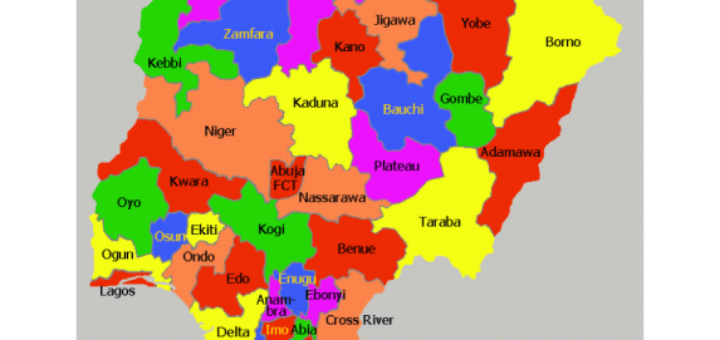
When the few who are benefiting from an existing order suddenly join the band wagon and begin to sing the song of change, then you had better look closely to see whether their own definition of change is the same as the popular definition.
A time was when the popular cry in Nigeria was power shift. The “shift” came on June 12 1993, but the power elite benefiting from the prevailing order, unable to resist the popular movement for change, panicked and truncated it. They subsequently imposed their own kind of power shift. They imposed a lily-livered Chief Ernest Shonekan, merely to temporarily pacify the popular movement. Chief Shonekan himself was soon shoved aside by the crown prince of the oligarchy.
But the Power Shift movement soon came back more determined. And once again the reactionary elements could not stave it off. Their resistance temporarily suffered a setback when their crown prince, Abacha, died suddenly. But they soon regrouped and imposed their own kind of power shift once again. They gave power to one of their own from the opposite angle whom they said they could trust. From prison, Obasanjo became president, and the rest is, as they say, history.
In this whole process Buhari is twice a disrupter who turned against the corrupt power elite who brought him to power hoping he could be of some use – a sin for which he is not much loved by the same elite.
The cry now is “Restructuring” of the polity and it is getting fiercer by the day. And once again the reactionary elements have smelt the coffee. They have cashed in on it. They have hijacked the Restructuring Movement. The grand design of course is to determine the direction the restructuring will take and impose their will once again.
Atiku Abubakar, former vice president for eight years, scion of the corrupt extant order and one of the major beneficiaries of it, has joined the restructuring movement, and it is not for nothing. He wants to be president of the country in 2019. Atiku tells us he can restructure Nigeria in six months if he is elected President. You would think that he would decree it into existence by the snap of the fingers.
But what exactly is restructuring? What is the restructuring movement talking about when it preaches the subject? This is where we run into a cul-de-sac of sorts. Come with me let’s take a look.
To the ordinary Nigerian on the street, restructuring of the Nigerian polity means re-ordering the extant political order to ensure equitable and fair distribution of resources. But even at that, opinions are divided on the most generally acceptable way to do this. Atiku and Vice President Prof Yemi Osinbajo, recently openly tackled each other over the subject. On the last count, there are at least four divergent and differing perspectives to restructuring – geographical restructuring, fiscal restructuring, political restructuring; and administrative-cum-governmental restructuring.
The geographical restructuring group, e.g. the southwest-based Afenifere, and the south-east-based Ohaneze Ndi Igbo, want the country to return to the defunct (1960 – 1966) regional arrangement of Northern region, Western region, Eastern region and Midwestern region with full fiscal control and quasi political autonomy – an arrangement that would engender a weakened central government. This is what they call “true federalism”. A splinter of this group wants six regions instead – North-west region, North-east region, North-central or Middle-belt region, South-west region, South-east region and South-south region.
What advocates of this type of restructuring have failed to tell us is why the former regional structure failed and the reason the military came in to impose a unitary system of government and subsequently balkanized the country into smaller state units.
Of course, the young military officers who terminated that regional arrangement gave corruption, impunity, and uneven development as reasons for their intervention which they claimed was a necessary corrective measure. The counter-coup of July 1966 dovetailed into a 30-month civil war in which not less than a million Nigerians, mostly Igbos, lost their lives. Further military interventions in governance saw further balkanization of the country into smaller state and local government units which the interventionists claimed were an attempt to bring government closer to the people – something we are yet to see even till date.
Another restructuring argument is identified from fiscal-cum-resource perspective. This group wants the current state structure to remain but with each state maintaining full control over mineral resources in its territory. This is what they call fiscal federalism or resource control. Proponents of this arrangement are mostly oil-bearing south-south states-based. It is not difficult to see why they take this position, but like the first group, they also fail to tell us how to address the problem of state inequality and uneven development.
And yet there is a third group arguing from the perspective of political restructuring. The Movement for the Actualization of Sovereign State of Biafra (MASSOB), and the (now) proscribed Indigenous Peoples of Biafra (IPOB) are the most vociferous advocates of this form of restructuring. They base their argument on Article I of the United Nations Charter which gives the right to self-determination to a people to determine its own destiny. The principle allows a people to choose its own political status and to determine its own form of economic, cultural and social development. Exercise of this right can result in a variety of different outcomes ranging from political independence through to full integration within a state.
What these groups are advocating, in a nutshell, is political independence. But they have forgotten that Article 1 of the UN Charter only applies to non-self-governing people. That is, people still under colonial rule. The principle does not apply in an already independent or self-governing state. Nigeria is already an independent country with self-governing people, so the right to self-determination as envisaged by Article 1 of the UN Charter cannot apply except by one of two ways – one, by mutual agreement through a referendum (more on this later), and two, by secession which in itself amounts to rebellion with its attendant consequences. Let us forget for now the conditions that must be present before a breakaway state can be recognized internationally.
The fourth and last restructuring argument in Nigeria is viewed from administrative-cum-governmental functions. This group wants the extant federal system to continue but with powers and responsibilities over most internal matters devolved from the center to the states and local governments – a form of decentralization which seeks to create independent level of authority of government with functions and responsibilities. They want, for instance, control over the police force, aviation, sea ports, education, highways, etc, while the center exercises control over limited sphere e.g. currency and foreign affairs. And for this, this group proposes greater percentage of the national cake to go to the states and local governments. Lagos State governor Akinwunmi Ambode is a major proponent of this arrangement.
One striking feature of the restructuring debate is that the advocates recognize the need for Nigerians to have a consensus on the issue but none of them is proffering any suggestion as to how to arrive at that consensus and what manner the restructuring should take. Even the ruling All Progressives Congress (APC) which has restructuring as part of its manifesto is guilty of this.
Before the APC came to power, Goodluck Jonathan’s PDP government in 2014 organised what it termed a national conference to chart a way for the country. The confab came out with some commendable recommendations which were nonetheless not generally accepted. The constitution of the membership of the confab did not help matters insofar as they were unelected. Jonathan’s Presidency and state governors merely handpicked the members. The national confab also suffered legitimacy because there was no legal framework for it.
We have been dissipating energy and time putting cart before the horse. The whole argument about restructuring should ideally start with a constitutional amendment aimed at providing for a referendum. A referendum will avail Nigerians opportunity to vote on any issue of national importance.”
After billions of Naira had been spent to fund the confab, Jonathan simply locked away its report somewhere in a comfortable locker with a promise to implement it only if he was re-elected President in 2015. In the end, and like all such exercises before it, it was all politics without sincere intentions, a huge waste of time, money and energy for one principal reason – the absence of a legal basis. Worse, our operative document, a’la the 1999 Constitution, does not have a provision on how Nigerians can arrive at a national consensus on issues of national importance; or how to even test the validity of some assumed notions of general acceptability of some major national issues.
And the restructuring debate continues.
What to do? It seems to me we have been dissipating energy and time putting cart before the horse. The whole argument about restructuring should ideally start with a constitutional amendment aimed at providing for a referendum. A referendum will avail Nigerians opportunity to vote on any issue of national importance.
It is through a referendum that we can validly determine what our national aspirations are. It is through a referendum that we can truly test the validity of the need to restructure the polity and the manner the restructuring would take. Curiously, neither the Government nor the National Assembly is pushing for inclusion of Referendum in our constitution. For as long as Nigerians have no legitimate way of arriving at a national consensus over issues of national importance, for so long would we continue to go back and forth.
The ongoing restructuring argument is simply cart before the horse.