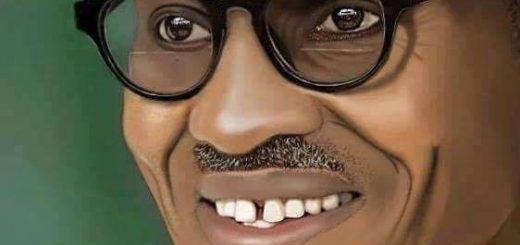
Fubara As Metaphor for a Political Wimp
6 views
By Frank Ofili
There is something more humiliating than losing a political battle: surrendering a battle you once appeared determined to win, then inviting the very people who cheered you on to celebrate your surrender as a triumph of peace. In Nigerian politics, this is not necessarily defeat. With the right press conference, it can be rebranded as statesmanship.
Governor Siminalayi Fubara of Rivers State may have just supplied us with a practical demonstration of this curious political art.
The other day, I listened with astonishment when Fubara publicly urged his supporters to stop regarding him as their political leader and to recognise his predecessor and political benefactor, Nyesom Wike, as their common leader. He also pledged support for President Bola Tinubu and the political coalition’s candidates ahead of the 2027 general elections.
For a moment, I wondered whether I had heard correctly. Was this the same Fubara who, at the height of his confrontation with Wike, enjoyed considerable public sympathy? Was this not the governor whose struggle had come to symbolise, for many of his supporters, the right of an elected official to escape the suffocating embrace of a political godfather?
Perhaps Nigerian universities should introduce a postgraduate course titled The Art of Losing Without Being Defeated: Surrendering Without Resigning. Fubara would make an excellent guest lecturer.
Here was a sitting governor, elected by the people, apparently asking those same people to transfer their political allegiance to the man with whom he had been locked in a bitter political struggle.
It was like watching a football captain spend the entire match urging his teammates to fight for victory, only to seize the microphone at half-time and announce that the opposing captain was now their rightful leader. The referee might be relieved, the opposing team might applaud, and the spectators might go home peacefully. But what exactly would the teammates make of their captain?
Fubara appeared to have surrendered the throne while still sitting on it.
Perhaps Nigerian universities should introduce a postgraduate course titled The Art of Losing Without Being Defeated: Surrendering Without Resigning. The curriculum would cover strategic retreat, political compromise and the Nigerian politician’s remarkable ability to convert personal misfortune into public achievement. Fubara would make an excellent guest lecturer.
But the latest development in Rivers State has taken the irony to another level.
Today, November 7, 2026, the presidential campaign train of the All Progressives Congress (APC) is in Port Harcourt, Rivers State, for its South-South presidential campaign rally in support of President Bola Tinubu’s 2027 re-election bid. And who is coordinating the presidential campaign in Rivers State? Not Governor Fubara, the incumbent governor of the state, but his predecessor, Nyesom Wike, now Minister of the Federal Capital Territory, and opposition Peoples Democratic Party (PDP) leader.
Indeed, Wike has been appointed the campaign coordinator for Rivers State and the FCT. He has taken the lead in the campaign preparations, including the inspection of the Adokiye Amiesimaka Stadium, the venue of today’s rally, alongside other party officials.
To be fair, Fubara has not been completely absent from the preparations. He has received campaign delegations and promised a massive turnout for the President’s visit. He was also among the political leaders at the airport awaiting Tinubu’s arrival. But that does not diminish the political symbolism of Wike’s appointment and visible leadership of the campaign machinery in Fubara’s own state.
Think about it for a moment. A state has an incumbent governor who belongs to the APC, yet the ruling party has entrusted the coordination of its presidential campaign in that state to a federal minister who once governed it and whose political relationship with the incumbent governor descended into a protracted crisis.
What could be more politically embarrassing?
One would ordinarily expect the governor of a state to be the natural rallying point for the President’s campaign in that state, particularly where the governor belongs to the President’s party. Yet, in Rivers State, the political arrangement appears to have reversed that expectation. The FCT Minister is the political conductor, while the sitting governor seems content to play a supporting role.
Perhaps this is what Fubara meant when he announced that Rivers State now has a common political leader.
If so, one is tempted to ask whether the governorship of Rivers State has become a ceremonial appointment, with the real political authority residing elsewhere. Knowing Nigeria as I do, I would not be surprised if this bizarre model were replicated across the states and subsequently entrenched in law through a constitutional amendment. Those men and women at the Dome at Abuja have proven to be incapable of making laws for the good governance of the country.
To understand how Fubara arrived at this rather curious political destination, it is necessary to revisit the circumstances that brought him into conflict with Wike in the first place.
The confrontation between the two men was never merely a quarrel between politicians over who should control Rivers State. It raised a fundamental question about Nigerian politics: after helping a man become governor, does a political benefactor acquire the right to determine how that governor exercises his constitutional powers?
Wike served eight years as governor of Rivers State. After helping Fubara emerge as his successor, he appeared determined to retain considerable influence over the state’s political machinery. Fubara, meanwhile, occupied an office whose constitutional authority was his to exercise and whose legitimacy rested on the electorate.
The collision was almost inevitable. What was less predictable was how far it would go and how it would end.
The crisis divided political loyalties, engulfed the State House of Assembly and attracted national attention. In March 2025, President Tinubu declared a state of emergency in Rivers State, resulting in the suspension of Fubara, his deputy and members of the state legislature. The emergency rule lasted until September 2025, when the suspended officials returned to office.
In my view, the declaration of emergency rule was unnecessary and disproportionate to the political crisis. Whatever the disagreements between the governor and the legislature, the situation called for political and constitutional solutions rather than the extraordinary intervention that followed.
At the height of the crisis, Fubara had something many politicians spend fortunes trying to manufacture: a compelling political narrative. He could present himself as an elected governor attempting to assert his independence against a predecessor seemingly unwilling to relinquish political control.
All he needed to demonstrate was that gratitude did not mean perpetual submission. For crying out, why did he not deploy the “creek boys” against his foes? If the situation were reversed, bet me, Wike would have done exactly that without bating an eye.
But Fubara was not the first Nigerian governor to find himself in a political struggle with a godfather. If he needed inspiration, he could have studied Theodore Orji, who eventually broke free from the political influence of his predecessor, Orji Uzor Kalu. Or he could have examined the stubborn resistance of former Anambra State governor, Chris Ngige, in his confrontation with his political godfather, Chris Uba.
Ngige’s story was particularly dramatic. His relationship with Uba was reportedly sealed through a traditional oath-taking arrangement at an Okija shrine. Ngige was said to have taken a Bible along – something that has acquired the flavour of political folklore. Perhaps he wanted Heaven to witness the agreement; perhaps he wanted to ensure that no earthly covenant became a permanent deed of ownership over his political soul.
Whatever the precise details, the confrontation that followed was anything but peaceful. In July 2003, Ngige was abducted by police officers in an extraordinary episode widely linked to the struggle over control of Anambra State. He eventually returned to office, although his governorship later ended when the courts ruled that Peter Obi had won the election.
The lesson is not that every governor must invite a kidnapping to prove his independence. It is that political godfatherism need not be a life sentence. A beneficiary can acknowledge the hand that helped him up without allowing that hand to remain permanently on his neck.
Fubara, too, once appeared to be writing his own version of that story. The question is whether he abandoned the manuscript before reaching the final chapter.
To be fair, Wike was no ordinary opponent. He possessed a formidable political network, loyalists within the legislature and influence in federal political circles. Fubara could hardly be expected to treat the confrontation as a school-yard quarrel in which the bigger boy could simply be asked to return another child’s lunch money.
Nor does occupying Government House automatically make a governor invincible. Political power is not a mathematical equation in which a governor’s title cancels every advantage enjoyed by his opponents.
Fubara had legitimate reasons to calculate carefully. Continued confrontation could have imposed further costs on Rivers State. Negotiation, compromise and reconciliation were perfectly reasonable options. Politics without compromise would be warfare conducted in expensive clothing.
But there is a difference between compromise and capitulation. A tactical retreat preserves the possibility of standing firm another day; capitulation risks convincing everyone that the retreat was the destination all along.
Fubara did not have to fight until the last political soldier was buried. He did, however, have to consider what his eventual settlement would communicate about the independence of the office he occupied.
If the objective was to restore peace, why did that peace appear to require such a conspicuous declaration of political allegiance? Could there not have been reconciliation without what sounded like a transfer of political leadership?
Nigerian proverbs often explain political absurdities better than political science textbooks. The child who washes his hands well may dine with elders. Respect and dignity can coexist. But the proverb does not say that the child must remain a child forever.
The hand that feeds you may deserve gratitude. It does not automatically acquire a deed of ownership over your future.
Imagine a tenant who has paid his rent, received his keys and moved into his apartment. One morning, the landlord knocks on the door and announces that the tenant may continue living there, but all visitors must henceforth be informed that the landlord is the real occupant.
The tenant then calls a press conference to announce this exciting new arrangement.
Would we congratulate him for resolving the landlord-tenant dispute, or ask whether he has misunderstood the meaning of tenancy?
Of course, a governor is not a tenant. But the analogy captures the unease surrounding Fubara’s declaration: how does a man remain the recognised occupant of an office while publicly appearing to defer its political leadership to someone else?
The larger problem is that Nigerian politics too often treats public institutions as extensions of politicians’ friendships, rivalries and private bargains. The godfather demands loyalty; the godson wants room to breathe; the electorate waits for the person it elected to govern.
When the quarrel becomes too expensive, the politicians shake hands, exchange smiles and announce reconciliation. The public is expected to applaud without asking what happened to the principles that supposedly justified the struggle.
The office of governor belongs to the state, not to the individual who helped its occupant win an election. The electorate did not vote for a political arrangement in which its chosen governor would serve as a ceremonial occupant of Government House while another politician supplied the operating manual.
Under such an arrangement, elections begin to resemble real-estate transactions. The godfather acquires the property; the godson merely occupies it.
And the electorate? It pays the agency fee.
But is Fubara really a political wimp?
A political wimp is not simply a politician who compromises, negotiates or retreats. Every serious politician must compromise at some point. Even the bravest commander knows that an army sometimes has to withdraw to avoid annihilation.
The real question is whether a retreat preserves the possibility of standing firm another day or leaves the retreating party appearing to have surrendered the very identity for which the battle was fought.
Only Fubara knows the full calculations behind his decision. It would be unfair to conclude from one public declaration that he lacks courage in every respect. Political courage is not measured by how loudly a man shouts at his opponent or by the number of enemies he accumulates.
But leadership is judged not only by private intentions. It is also judged by public choices and their consequences.
Fubara may have made peace. He may even have secured his political survival. But political survival and political stature are not the same thing. One keeps a man in office; the other determines how history remembers him.
Perhaps he believes he has made a necessary sacrifice for peace. Perhaps he has concluded that continued confrontation would be too costly for the state. There may be political calculations outsiders cannot fully appreciate, and it would be presumptuous to pretend to know his private motivations.
Nevertheless, politicians cannot dictate how the public interprets their actions.
For now, however, the APC presidential campaign in Port Harcourt offers perhaps the most striking illustration of the political predicament in which Fubara finds himself. The President is visiting a state governed by an APC governor, yet the man at the centre of the campaign’s political coordination is not the governor but his predecessor.
There is an irony here that should not escape anyone. Wike once occupied the Rivers State Government House. Today, although he no longer holds that office, he appears to retain sufficient political influence to occupy the commanding position in the state’s presidential campaign arrangements. Fubara, who occupies the Government House, is left to share the political stage with the man whose control he once appeared determined to escape.
How humiliating!
Perhaps Fubara will rewrite the ending. He may yet demonstrate that his reconciliation with Wike was a calculated move to secure peace, not an abandonment of independent leadership. If he does, he will have the last laugh, and this article may become a premature obituary for a political career that was merely taking a strategic detour.
But for now, his predicament offers a cautionary lesson to political godsons everywhere. The man who helps you become governor may reasonably expect gratitude, consultation and loyalty. But if he expects permanent obedience, he has not groomed a successor. He has merely found a more convenient way to remain in office without occupying it.
And the godson who accepts that arrangement must eventually answer an uncomfortable question: if he cannot exercise the authority attached to the office he occupies, what exactly did he seek the office for?
A governor’s chair is not a borrowed stool that must be returned whenever the owner comes visiting.
Fubara’s political story is not necessarily over. Politicians have surprised us before. Men who appeared finished have returned to political relevance, while celebrated heroes have disappeared into the footnotes of history.
The tragedy is not that Fubara may have lost a political battle. Even formidable leaders lose battles. It is that a man who once appeared to embody resistance to political domination now risks being remembered for the manner in which he not only accommodated it, but capitulated altogether.
That is what makes him a metaphor for a political wimp—not necessarily a man without power, but a man whose public actions have raised doubts about his willingness to exercise that power independently.
A political wimp, in this sense, is someone who raises expectations of resistance, attracts others to his cause, and then leaves them wondering whether the struggle was worth the trouble.
The bitterest irony is that Fubara may have achieved what many politicians ultimately desire: survival. He remains governor, the political storm may have subsided, and the immediate danger of prolonged confrontation may have diminished.
But survival comes in different forms. A man can survive a battle and lose his standing. He can retain his title and surrender the symbolism attached to it. He can remain in the palace while the public wonders who really occupies the throne.
And so, as the APC presidential campaign train rolls into Port Harcourt today, with Wike at the helm of its political coordination and Fubara occupying the Government House, we are left with a question that is at once humorous and deeply troubling:
Who is the Governor of Rivers State – and who merely holds the title?