Wanted: A National Diagnosis
117 views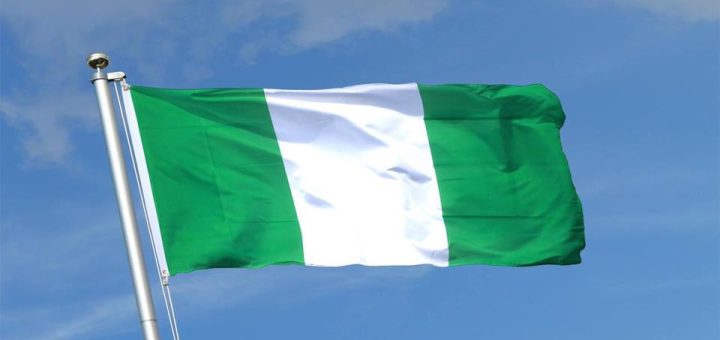
By Frank Ofili
Every society has its own vocabulary of ridicule. Sometimes, a place name becomes more than a geographical reference. It enters popular speech as a coded insult, a euphemism for madness, a synonym for criminality, or a discreet reference to activities that cannot comfortably be discussed in polite company.
In such societies, geography becomes psychology. A name on the map becomes a diagnosis in the street. Mention a particular neighbourhood, and people immediately know what you mean. No further explanation is necessary. The place has become a reputation, an institution and, sometimes, a national joke.
Nigeria, of course, has perfected this art. We are a people who can turn almost anything into a nickname, a proverb or a source of comic relief. If we cannot solve a problem, we rename it. If we cannot reform a society, we invent a joke about it. And if a situation becomes sufficiently ridiculous, we simply give it a Nigerian name and move on.
Perhaps it is time for us, as a people, to undertake some serious soul-searching and embark on a journey of national self-rediscovery
Take Lagos, for instance. When someone says a person has been taken to Yaba Left, nobody is necessarily discussing a road junction. The expression has become popular shorthand for suspected mental instability—a suggestion that somebody may have misplaced the last functioning component of their reasoning faculty.
Then there is Ayilara, historically associated in popular Lagos parlance with conventional prostitution, while Allen and Lekki have acquired their own reputations in contemporary conversations about hookups and transactional relationships. Apparently, the old trade has acquired new packaging. Prostitution sounds too direct; a hookup sounds like something that happened accidentally between two consenting adults who merely lost their way after dinner.
Even sin, it seems, has embraced rebranding.
Move to Benin City, and Uselu enters the conversation. In popular street references, the name may be invoked to suggest madness or eccentric behaviour. In Warri, Okere has its own street reputation, depending on the context. In Abeokuta, Aro evokes the well-known psychiatric institution whose name has also entered popular speech as a reference to mental instability. Ibadan contributes Agodi-Isale to this colourful vocabulary, while Port Harcourt has Diobu, a densely populated neighbourhood whose reputation in street conversations sometimes overshadows the ordinary lives of its residents.
Of course, not everyone living in these places is a criminal, a prostitute or a candidate for psychiatric evaluation. That would be as absurd as concluding that everyone living in a government house is a statesman. These reputations belong to popular speech and urban folklore, not to every unfortunate individual whose utility bill carries the address.
But once a place name enters popular consciousness, geography can become a victim of its own publicity.
The phenomenon is hardly peculiar to Nigeria. Around the world, neighbourhoods acquire reputations for crime, vice, eccentricity or institutional confinement. Nigeria, however, deserves special recognition for the creativity with which we deploy these names. We do not merely describe behaviour; we locate it. We do not simply say somebody is behaving irrationally; we provide an address. A single place name can perform the work of an entire paragraph.
Imagine a Nigerian family meeting. An uncle makes a wildly implausible political argument. Before anyone challenges his statistics, another relative quietly asks whether he has recently visited Yaba Left. A cousin who has become too enthusiastic about online romance is asked whether the relationship began in Allen or Lekki. Someone whose behaviour has become difficult to explain is advised to consider a short trip to Aro.
The family meeting is over. No minutes need to be taken.
Our politicians, too, could benefit from this geographical shorthand. A politician who promises electricity in six months after eight years of failing to provide it might be suspected of having taken a wrong turn between common sense and Yaba Left. A public official who announces that poverty has declined while citizens struggle to afford food may be accused of conducting his economic research in a secluded corner of Lekki.
And the politician who defects from one party to another, depending on the direction of the political wind, needs neither a compass nor an ideology. He simply requires a reliable driver and a good knowledge of the expressway connecting ambition to self-preservation.
If a place can acquire a reputation from the behaviour of its inhabitants, what reputation is Nigeria acquiring from the conduct of its leaders and the acquiescence of its citizens?
If political inconsistency were a criminal offence, some of our politicians would have become permanent residents of places they mention only in campaign speeches.
But the real joke begins when we stop examining individuals and look at the country itself.
Nigeria is blessed with enormous human and natural resources, yet millions struggle to afford food, decent housing and basic healthcare. We celebrate democracy while politicians treat public office as a private investment. We condemn corruption but defend corrupt politicians when they belong to our political camp. We denounce nepotism until our own relatives become beneficiaries. We demand accountability from leaders but excuse their failures when ethnicity, religion or political loyalty gets in the way.
Our moral indignation, it seems, comes with conditions attached.
The real joke, therefore, is not that Nigerian cities have neighbourhoods whose names have become shorthand for madness, criminality or vice. Every society has its dark corners. The joke is that we have become so adept at identifying madness in particular neighbourhoods that we fail to recognise the dysfunction unfolding on a national scale.
We know where to locate the man whose behaviour defies reason. We have names for places associated with criminality and vice. Yet when politicians lie without blushing, public officials preside over spectacular failures, and citizens defend the indefensible, we suddenly lose our diagnostic abilities.
Apparently, madness becomes a national problem only when somebody else is responsible.
At some point, the question ceases to be which neighbourhood deserves the dubious honour of being associated with madness. The more pertinent question is whether these neighbourhoods are merely carrying the reputational burden of a dysfunction that has spread far beyond their boundaries.
Perhaps the problem is no longer confined to Yaba Left, Aro, Uselu, Okere or any other place whose name has entered the vocabulary of street ridicule.
Perhaps the problem has acquired a national address.
And perhaps that address is Nigeria.
What else do we call a country where failure can be rewarded with promotion, political defections are mistaken for strategy, public deception is defended as political communication, and citizens have learnt to laugh at circumstances they should be demanding to change?
We call it Naija!
What a wonderfully elastic word. It conveys affection, exasperation, disbelief and despair. Something goes wrong, and we say, “Naija!” A public official makes an outrageous statement, and we sigh, “Only in Naija!” Another national embarrassment unfolds, and we laugh, forward the video, create a meme and return to our daily struggles.
Naija has become our all-purpose explanation for the inexplicable, our national shrug in the face of the outrageous, and our escape hatch from the uncomfortable business of demanding accountability.
But beneath the laughter lies a troubling possibility: has Naija become more than an affectionate nickname? Has it become our collective euphemism for a country whose contradictions have become so normalised that we no longer consider them extraordinary?
If Yaba Left has become shorthand for madness, what should we call a political culture in which irrationality is routinely rewarded? If certain neighbourhoods are associated with criminality, what name should we give a system in which corruption is condemned in public and accommodated in practice? And if a place can acquire a reputation from the behaviour of its inhabitants, what reputation is Nigeria acquiring from the conduct of its leaders and the acquiescence of its citizens?
Perhaps we should stop laughing long enough to ask ourselves these questions.
There is a historical irony here. Nigeria’s present name is commonly traced to Flora Shaw, the British journalist who proposed it in 1897, before the 1914 amalgamation of the Northern and Southern Protectorates. Shaw later married Frederick Lugard, the colonial administrator associated with that amalgamation.
In the irreverent spirit of this essay, one might joke that our national identity began with a colonial mistress—read: ashawo—naming the country for us. It is a deliberately provocative play on words, not a historical description of Shaw’s occupation.
More than a century later, we have embraced another name: Naija. We have taken the inherited name, shortened it, given it a local accent and made it our own. But have we changed only the name, or have we also changed the national character that the name now evokes?
My erudite professor at the University of Lagos, Professor Akin Oyebode, once proposed a thought-provoking alternative. In 2014, he suggested that Nigeria should be called the United States of Songhai. Whether Songhai is the answer is another matter. A change of name cannot, by itself, cure institutional failures, moral contradictions or leadership deficiencies. We could rename Nigeria the United States of Heaven and still find ourselves quarrelling over who should control the gate.
Nevertheless, Professor Oyebode’s proposal invites us to reflect on our history, identity and national future. Perhaps the urgent task is not to change our name but to change the things that make it such a convenient punchline. We need a country where integrity is not mistaken for foolishness, public office is not a licence to loot, and competence is not sacrificed on the altar of political loyalty.
Until then, we may continue to laugh at Yaba Left, make jokes about Aro and attach colourful reputations to neighbourhoods across our cities. But we should occasionally pause and ask ourselves an uncomfortable question: what if the whole country has become a metaphor for the very things we ridicule?
Perhaps Nigeria has already acquired such a name to denote her socio-political notoriety. That name is Naija.
Naija is it! Wherever we got that name from.
Perhaps it is time for us, as a people, to undertake some serious soul-searching and embark on a journey of national self-rediscovery. Before we rush to rename the country, we must confront the question of what we have become—and what we hope to be.
Otherwise, we may change the name on the national signboard, repaint the gates and commission a new coat of arms, only to discover that the same old country is still living inside.
And that, ladies and gentlemen, would require more than a change of address. It would require a national psychological evaluation.