Remembering Stephen Keshi: The Man Who Redefined African Football – By Frank Ofili
286 views
Few figures in African football have left a legacy as sweeping, symbolic, and transformative as Stephen Okechukwu Keshi—fondly known across the continent as The Big Boss.
Born on 23 January 1962 in Azare, Bauchi State, Nigeria (of Illah in Oshimili North Local Government Area of Delta State parentage), Keshi’s story is one of defiance, leadership, and a relentless belief in the power of African talent. His journey from a commanding defender to a history‑making coach reshaped the narrative of what African footballers and managers could achieve on the global stage.
The Early Years: A Defender with Presence
Keshi’s professional career began in Nigeria with ACB Lagos and New Nigeria Bank before he ventured abroad—a bold move at a time when African players rarely made such leaps. His early stints in Ivory Coast with Stade d’Abidjan and Africa Sports sharpened his defensive instincts and tactical awareness.
But it was in Belgium, particularly with R.S.C. Anderlecht, that Keshi cemented his reputation. Between 1987 and 1991, he became a pillar of the club’s backline, winning the Belgian league and earning admiration for his leadership and aerial dominance. His European success opened doors for other Nigerian players, making him a pioneer of the “Nigerian wave” that would later sweep through Belgian football.
Super Eagles Captain: Leading a Golden Generation
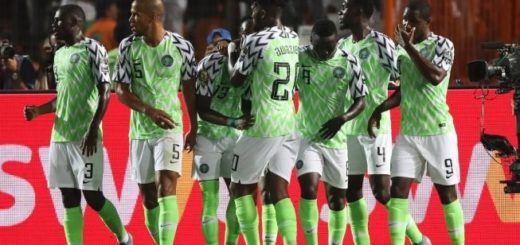
Keshi’s influence on the Nigerian national team is impossible to overstate. His commanding presence, and influence on the team lead to media speculation that there was a mafia in the Super Eagles. Earning 64 caps for the Super Eagles, he captained the squad during one of its most iconic eras.
His crowning moment as a player came in 1994, when he led Nigeria to victory at the Africa Cup of Nations (AFCON)—a triumph that announced Nigeria as a continental powerhouse. That same year, he helped guide the team to its first-ever FIFA World Cup appearance, where the Super Eagles dazzled the world with their flair and fearlessness.
Keshi was not just a defender; he was a general. His presence in the locker room and on the pitch shaped the mentality of a generation that included legends like Austin “Jay‑Jay” Okocha, Rashidi Yekini, and Sunday Oliseh.
The Coach Who Broke Barriers
After retiring from playing, Keshi transitioned into coaching—and once again, he became a trailblazer.
Togo: The Miracle of 2006
In 2004, Keshi took charge of the Togo national team, a side with little international pedigree. Against all odds, he led them to qualify for the 2006 FIFA World Cup, the nation’s first and only appearance on football’s biggest stage. It was a seismic achievement that elevated his status across Africa.
Nigeria: A Historic Homegrown Triumph
Keshi returned to Nigeria as head coach in 2011, inheriting a team in transition. What followed was nothing short of remarkable.
In 2013, he guided the Super Eagles to an unexpected AFCON victory, becoming only the second person in history—after Egypt’s Mahmoud El‑Gohary—to win the tournament both as a player and as a coach. This achievement shattered long‑held biases against African coaches and proved that homegrown leadership could deliver elite results.
Under his guidance, Nigeria also reached the Round of 16 at the 2014 FIFA World Cup, showcasing tactical discipline and resilience.
A Legacy Larger Than Football
Keshi’s impact transcends trophies. He became a symbol of African self‑determination in a sport long dominated by European coaching philosophies. His success emboldened federations across the continent to trust local talent.
He was also a mentor, a father figure, and a cultural icon—someone who carried himself with authority but also with a deep love for the game and his players.
Keshi passed away on 7 June 2016 at the age of 54, but his legacy continues to shape African football. From the defenders who model their game after him to the coaches who cite him as inspiration, The Big Boss remains a towering figure, even as the Nigerian senior men’s national football team, The Super Eagles – which he served as both player and coach and took them to World Cup on both fronts – continues to struggle even today.
Why Stephen Keshi Still Matters
In an era where African football continues to fight for respect on the global stage, Keshi’s story is a reminder of what is possible when talent meets opportunity—and when belief meets leadership.
He was not just a player. He was not just a coach. He was a movement.
And movements do not die, they echo.
Today,, I remember you, The Big Boss. May your soul continue to rest in peace.
Iseee!!!