Dennis Rodman: The Rebel Who Redefined Greatness
122 views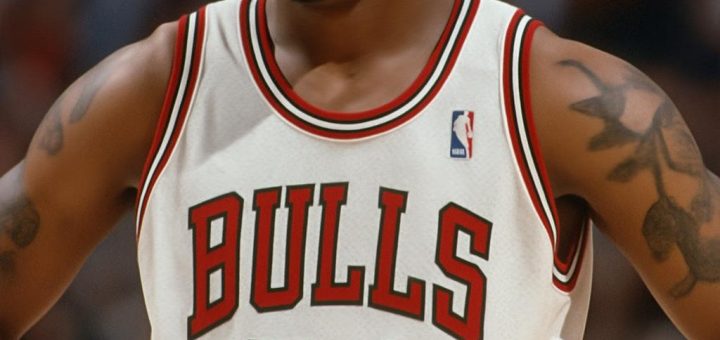
Dennis Rodman has always lived at the intersection of brilliance and bewilderment. He was not just a basketball player; he was a cultural event — a human plot twist who forced the world to rethink what greatness could look like. His story is messy, magnetic, and utterly singular. And decades after his final NBA game, Rodman remains one of the most compelling figures in sports history.
A Childhood That Didn’t Predict Greatness
Rodman’s early life in Trenton, New Jersey, and later in Dallas, Texas, was defined by instability. He was not the kid anyone expected to become a professional athlete. He was small, shy, and overlooked — the opposite of the typical future NBA star. He did not make his high‑school basketball team. He worked odd jobs. He drifted.
Then came the growth spurt. Practically overnight, Rodman shot up to 6’7″. But height alone does not create a Hall of Famer. What changed everything was his discovery of basketball as a refuge — a place where effort mattered more than pedigree.
At Southeastern Oklahoma State University, a tiny National Association of Intercollegiate Athletics (NAIA) school, Rodman found his footing. He dominated. Scouts noticed. And in 1986, the Detroit Pistons took a chance on a 25‑year‑old rookie with raw talent and relentless drive.
Becoming a Bad Boy
Rodman arrived in Detroit at the perfect moment. The Pistons were building a reputation as the “Bad Boys” — a bruising, unapologetic team that embraced physicality and psychological warfare. Rodman fit right in.
He was not the star. He did not need to be. He carved out a role as the team’s emotional engine, a defender who could guard all five positions and a rebounder who treated every missed shot like a personal challenge.
By 1990, he was a two‑time NBA champion and the league’s Defensive Player of the Year. But even then, the world had no idea what Dennis Rodman was capable of becoming.
The Reinvention Years
After Detroit, Rodman’s career took a turn — both on and off the court. His time with the San Antonio Spurs marked the beginning of the Dennis Rodman the world would come to know – the hair dye, the piercings, the tattoos, the public relationships, the tabloid headlines.
But beneath the spectacle was a player performing at an all‑time level. He became the NBA’s most dominant rebounder, leading the league for seven straight seasons. His understanding of angles, timing, and body positioning bordered on genius. Teammates described him as a savant who studied how every shooter’s miss behaved.
He was not just grabbing rebounds; he was decoding the physics of basketball in real time.
The Bulls Dynasty and the Art of Controlled Chaos
When the Chicago Bulls signed Rodman in 1995, it felt like a gamble. Michael Jordan and Scottie Pippen were global icons. Rodman was a walking headline. But on the court, the fit was perfect.
Rodman did not need the ball. He did not need plays called for him. He needed freedom, and Phil Jackson gave it to him.
The result? Three straight championships from 1996 to 1998.
Rodman’s contributions were often invisible in the box score but undeniable on the floor. He neutralized opposing stars. He extended possessions. He dove into crowds. He played with a ferocity that elevated everyone around him.
And yes, he also disappeared to Vegas mid‑season, wrestled with Hulk Hogan, and showed up to games with new hair colors like a mood ring. But somehow, the chaos never overshadowed the craft.
A Cultural Force Beyond Basketball
Rodman’s influence did not end when he stepped off the court. He became a symbol of radical self‑expression long before it was celebrated. In an era when athletes were expected to be polished and predictable, Rodman was defiantly himself.
He wore wedding dresses. He posed for provocative magazine covers. He challenged gender norms. He blurred the lines between athlete, entertainer, and performance artist.
And then there is his unexpected role in international diplomacy. His visits to North Korea — controversial, surreal, and widely debated — added yet another layer to a life that refuses to fit into any conventional narrative.
The Vulnerability Behind the Persona
What makes Rodman so fascinating is not just the spectacle — it is the humanity beneath it. His autobiographies, interviews, and public struggles reveal a man who has battled loneliness, identity, and mental health challenges. The flamboyance was often armor. The rebellion was sometimes a cry for connection.
And yet, through it all, he remained fiercely loyal to teammates, coaches, and friends. Many describe him as gentle, generous, and deeply misunderstood.
A Legacy That Defies Categorization
Rodman’s basketball résumé is unimpeachable:
- 5× NBA champion
- 2× Defensive Player of the Year
- 7× rebounding champion
- Hall of Fame inductee
But his legacy is bigger than awards.
He expanded the definition of what an athlete could be. He showed that greatness does not always look polished. He proved that role players can be superstars in their own way. And he taught a generation that authenticity — even when messy — can be a form of courage.
Why Dennis Rodman Still Matters
In today’s world, where athletes are increasingly outspoken, expressive, and multidimensional, Rodman feels like a precursor — a blueprint for the modern sports icon who refuses to be boxed in.
He is not perfect. He is not predictable. But he is real.
And that is why Dennis Rodman remains unforgettable.