The Typist Is Dead: Jobs That Disappeared While We were Busy Working
189 views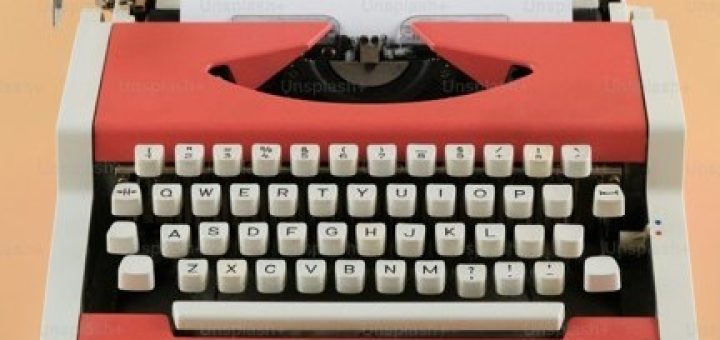
By Frank Ofili
I was once a typist.
A proper typist, mind you. Not these modern keyboard warriors who can delete an entire paragraph with one casual tap and pretend nothing happened.
I am talking about the manual typewriter, the clattering mechanical monster which punished every mistake publicly.
In those days, a typographical error was almost a disciplinary offence.
You either reached for Tippex, applied it with the delicate concentration of a neuro-surgeon and waited for it to dry, or, if the document was important enough, you started all over again.
I remember those days with a mixture of nostalgia and amusement.
As a young typist in the Judicial Service Commission of the defunct Bendel State, I sat before my typewriter and attacked the keys with youthful enthusiasm. The faster you typed, the more accomplished you appeared. The sound of several typewriters going simultaneously in an office was the industrial music of bureaucracy.
Tak-tak-tak-tak-tak.
Then came the triumphant ding at the end of the line.
We were indispensable.
Or so we thought.
Around us were stenographers, confidential secretaries, filing clerks, registry clerks, switchboard operators and messengers. These were not peripheral occupations. They were respectable, pensionable jobs, complete with salary grades, promotion prospects and, in the Nigerian public service tradition, impressive titles.
Then technology arrived.
It did not knock.
It did not issue a query.
It did not invite the unions for collective bargaining.
It simply began to dismantle an entire occupational civilisation.
The typist did not see Microsoft Word coming.
The stenographer did not anticipate digital recording.
The telex operator did not foresee email.
The switchboard operator could not have imagined a world in which even the office cleaner would carry two mobile phones.
The filing clerk probably regarded the idea of a “paperless office” as the hallucination of an over-fed consultant.
But history has a wicked sense of humour.
Today, the typewriter is a museum piece.
The typist is dead.
I survived.
Not because I was particularly clairvoyant. Far from it. I simply developed an incurable habit of learning.
My love for James Hadley Chase novels had already pushed me towards writing. Somewhere between typing official correspondence and devouring crime thrillers, I began to realise that the machine before me was merely a tool. The more important asset was the mind behind it.
So I moved.
From typing other people’s thoughts, I began to write mine.
From the clerical world, I moved into Human Resources.
From personnel administration, I had to learn modern HR practice.
And now, I find myself engaging Artificial Intelligence, learning new digital tools and exploring a world that would have sounded like science fiction to the young typist I was in 1983.
That is the lesson.
Jobs rarely send obituary notices.
They mutate quietly.
The confidential secretary became the Executive Assistant.
The personnel officer became the HR Business Partner.
The newspaper reporter became a Multimedia Journalist.
The store ledger clerk became an ERP Officer.
The payroll clerk became an HRIS Specialist.
The photographer entered the darkroom one evening and emerged years later carrying Photoshop.
Now Artificial Intelligence is at the gate.
Writers are nervous.
Accountants are watching.
Lawyers are clearing their throats.
HR professionals are organising webinars.
And software developers, the same people who helped automate everybody else’s jobs, are suddenly discovering religion.
But perhaps we are asking the wrong question.
The question is not:
Will AI take my job?
The better question is:
What is my job becoming?
The answer lies in two words organisations like to throw around at conferences but often fail to practise seriously:
Reskilling and upskilling.
Upskilling means becoming better and more technologically competent in what you already do.
Reskilling means acquiring the competence to do something different when your present role begins to disappear.
The distinction may eventually determine who remains employable and who becomes a highly experienced expert in a job nobody needs.
The modern worker must become a permanent student.
Learn AI.
Learn data.
Learn digital communication.
Understand the technology disrupting your profession.
Attend courses. Read. Experiment. Ask younger colleagues questions without feeling diminished. Unlearn old methods when necessary.
The tragedy is not that jobs change.
Jobs have always changed.
The tragedy is to stand still while your profession is moving.
I survived the death of the typist.
Not because the typewriter survived.
But because I moved.
The world of work is moving again.
Move.