America: The Making Of A Robbery State?
126 views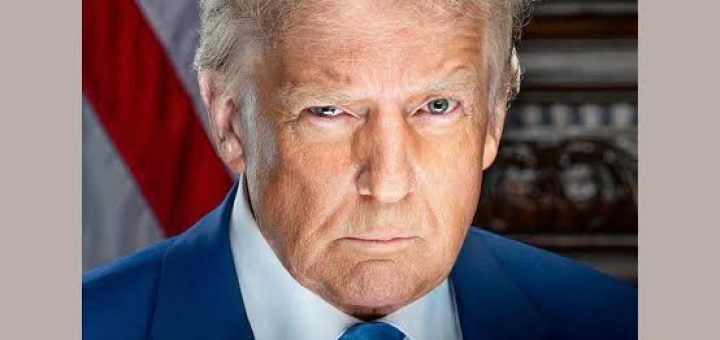
By Frank Ofili
There was a time when America went to war carrying a moral banner.
It spoke of democracy. It spoke of freedom. It spoke of human rights and the sanctity of international law. Even when the bombs fell, Washington always found a noble phrase with which to explain the rubble.
Today, under Donald Trump, the mask appears to be slipping.
First, Venezuela.
Trump’s America removed Nicolás Maduro from power, asserted extraordinary influence over the political transition that followed and moved to control Venezuela’s oil trade and the revenues flowing from it.
The justification?
Maduro was a dictator.
How convenient.
Remove the dictator. Secure the oil. Control the money.
Whatever one thinks of Maduro—and there is much to criticise about his years in power—the spectacle of a powerful country removing the leader of a weaker nation and then turning its attention to that nation’s vast oil wealth raises an uncomfortable question:
Was this really about democracy, or was democracy merely the wrapping paper around a resource grab?
Now, Iran.
For months, Washington gave the impression that it was interested in negotiations. Diplomats moved. Intermediaries shuttled. Statements were issued. The world was encouraged to believe that beneath the threats and military posturing remained a genuine desire for peace.
Then came a fragile interim arrangement.
Critical questions surrounding Iran’s nuclear programme, oil waivers, frozen Iranian assets and the Strait of Hormuz remained unresolved. Accusations and counter-accusations followed. The talks collapsed.
Then the missiles returned.
America resumed striking Iran. Iranian ports were blockaded. And Donald Trump announced that ships passing through the Strait of Hormuz could be required to pay America a 20 per cent “reimbursement” fee for protection.
Protection?
From whom?
This sounds remarkably like the language of the street protection racket elevated to international diplomacy:
“Pay us and we will protect you from the crisis we are helping to escalate.”
The irony is breathtaking.
Only weeks earlier, the United States Treasury had condemned Iran’s attempt to collect passage tolls through the Strait as “extortion.” Washington sanctioned Iran’s Persian Gulf Strait Authority and denounced the arrangement as an illegal attempt to monetise maritime insecurity.
If America’s objective is to break Iran, dismantle its regional influence and redraw the Middle East to guarantee permanent Israeli military supremacy, then Washington should simply say so.
Now America proposes its own fee.
When Iran does it, it is extortion.
When America does it, it is security.
When Iran seeks control of the Strait, it is a threat to international commerce.
When America seeks control, it is the defence of freedom of navigation.
At what point does hypocrisy become policy?
This is why America’s conduct in the negotiations with Iran must now be interrogated.
Was Washington ever genuinely interested in peace?
Or were the negotiations merely strategic theatre—a diplomatic waiting room in which Iran was expected to surrender its leverage while America preserved all its options?
Negotiation, in its true sense, requires compromise. Both sides enter the room knowing neither will leave with everything it wants.
But Trump’s diplomacy increasingly resembles an ultimatum dressed in a suit.
The other side is expected to concede.
America is expected to dictate.
And if the weaker party refuses, sanctions are tightened, aircraft carriers move closer and missiles begin to fly.
That is not negotiation.
That is coercion with diplomatic stationery.
And behind the confrontation with Iran stands the unmistakable shadow of Israel.
Let us stop pretending.
America increasingly appears to be executing Israel’s strategic agenda in the Middle East.
Israel wants Iran weakened. America bombs Iran.
Israel wants Hezbollah degraded. Washington provides weapons, intelligence and diplomatic cover.
Israel wants unquestioned military supremacy in the Middle East. America appears determined to ensure that no regional power becomes strong enough to challenge it.
Yet Iran remains the permanent villain of Western diplomacy.
Iran is certainly no innocent victim. Tehran has threatened commercial shipping, supported armed groups and pursued regional policies that have destabilised the Middle East. Its nuclear programme raises legitimate international concerns.
Negotiation, in its true sense, requires compromise. Both sides enter the room knowing neither will leave with everything it wants.
But acknowledging Iran’s conduct does not absolve America or Israel of theirs.
Two wrongs do not suddenly produce international legitimacy.
If civilian deaths are the yardstick for identifying barbarism, then count every corpse.
Count the Palestinian child.
Count the Lebanese mother.
Count the Iranian civilian.
Count the Israeli victim.
Do not count selectively.
You cannot flatten cities, bury children beneath rubble and then declare yourself civilised simply because your bombs carry Western serial numbers.
This selective morality has become the great disease of the so-called rules-based international order.
When Iran fires a missile, it is terrorism.
When Israel drops a bomb, it is self-defence.
When Iran threatens the Strait of Hormuz, it is an attack on global commerce.
When America blockades Iranian ports and proposes charging ships for passage, it is maritime security.
When Iran supports armed groups, it is destabilising the Middle East.
When America arms Israel and joins a war against Iran, it is defending the international order.
What rules?
Whose order?
This is no longer an international order.
It is an international pecking order.
America writes the rules.
Israel enjoys exemptions.
Everyone else obeys.
What is emerging is a dangerous doctrine in American foreign policy: might confers entitlement.
If a country possesses something strategically valuable—oil, minerals, a shipping route or geographical advantage—it must either align itself with Washington or risk discovering that “national security” has a remarkably elastic definition.
Venezuela has oil.
Iran sits beside the Strait of Hormuz.
Perhaps that is the connecting thread.
America once accused other powers of imperial ambition. It warned the world about spheres of influence, resource grabs and gunboat diplomacy.
Today, it increasingly appears to be practising a modernised version of the same things.
The gunboats are now aircraft carriers.
The colonial administrator has been replaced by a pliable political arrangement.
The tribute is no longer collected in gold.
It may now be collected in oil revenue or a 20 per cent cargo fee.
If Russia attempted this, the West would call it aggression.
If China did it, Western media would call it expansionism.
If Iran did it, Washington would call it extortion or terrorism.
But when America does it, it is called “freedom of navigation.”
The hypocrisy is nauseating.
This is why the collapse of negotiations with Iran should trouble the world. It is not simply about Tehran’s nuclear ambitions. It is not merely about Israel. It is not only about the Strait of Hormuz.
It is about whether international relations are returning to their most primitive principle:
The strong take. The weak protest. And the victor writes the press statement.
If America’s objective is to break Iran, dismantle its regional influence and redraw the Middle East to guarantee permanent Israeli military supremacy, then Washington should simply say so.
Stop insulting the intelligence of the world.
Stop calling coercion diplomacy.
Stop calling robbery security.
Stop calling double standards international law.
And stop calling power politics at gunpoint a “rules-based international order.”
America may still describe itself as the guardian of that order.
But a guardian who writes the rules, interprets the rules, breaks the rules and then charges others for protection begins to look remarkably like something else.
A protection racket.
America has removed the mask.
The world can now see the face beneath it.
It is not the face of a policeman.
It increasingly looks like the face of a robber—heavily armed, morally entitled and demanding a toll.
And if the trajectory from Venezuela to Iran continues, history may record that Trump’s America did not merely abandon the world order it helped create.
It monetised its collapse.