Ned Never Stood a Chance
178 views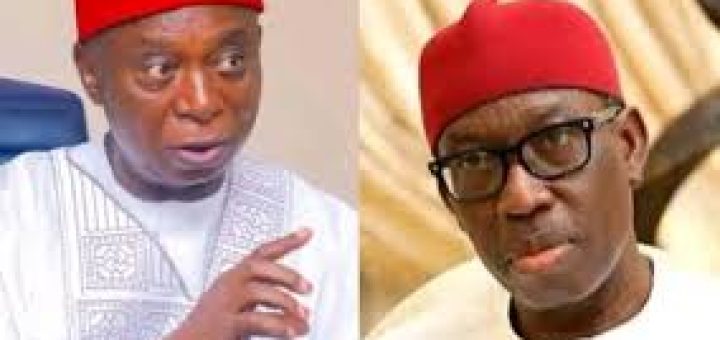
Frank Ofili
Nigerian politics is not won by noise, celebrity status, or media visibility. It is won by structure, alliances, grassroots acceptance, and deep political relationships built over decades. That reality once again played out in the APC Delta North Senatorial primary election, where Senator Ned Nwoko was decisively outmaneuvered by former Governor Ifeanyi Okowa — a politician whose résumé, experience, and political network far outweigh those of Ned.
To many observers, Ned’s defeat was predictable long before the first vote was cast.
The truth is that Ned’s emergence as senator in 2023 was aided largely by extraordinary circumstances. The late Senator Peter Nwaoboshi, arguably one of the most formidable grassroots politicians Anioma land has produced in recent times, was politically incapacitated at the time due to his incarceration and ongoing money laundering trial. Had Nwaoboshi remained politically active during that election cycle, many believe Ned Nwoko would never have secured the senatorial ticket, much less make it to the Senate.
A politician may survive opposition from rivals, but fighting one’s own roots is often politically fatal.
Politics in Delta State, especially in Delta North, has always revolved around structures, loyalty networks, and local acceptance. On these fronts, Ned struggled badly.
One major factor was his prolonged confrontation with the traditional institution in his Idumuje-Ugboko community. In African politics, particularly in Delta State, open hostility toward one’s traditional ruler and community elders carries grave political consequences. A politician may survive opposition from rivals, but fighting one’s own roots is often politically fatal. Ned’s perceived conflict with his traditional monarch alienated many who ordinarily would have formed his natural political base. In Anioma politics, respect for traditional authority still matters deeply.
Then came the controversial handling of the Anioma State agitation. While the creation of Anioma State remains a legitimate aspiration for many people of Delta North extraction, Ned’s approach created suspicion and resistance. His attempt to situate Anioma within the South-East political bloc was seen by many as insensitive to the complex identity and political realities of Delta State. For many Anioma people, the issue is not merely ethnic affinity but political calculation, historical context, and regional balance.
More damaging was the perception that Ned neither consulted widely nor carried stakeholders along. Rather than building consensus, he appeared determined to impose a personal political vision. In politics, especially in a politically sophisticated environment like Delta, arrogance disguised as conviction is often resisted.
Beyond rhetoric and grandstanding, many constituents also struggled to point to concrete, visible impacts of Ned’s tenure in the Senate. Political branding and social media popularity do not substitute for grassroots political capital. Across Delta North, there remains a widespread perception that Ned projects elitism, pride, and political arrogance. Whether fair or unfair, perception is everything in politics.
Meanwhile, Ifeanyi Okowa came into the contest with overwhelming advantages.
Unlike Ned, Okowa is not merely a politician; he is a complete political institution in Delta State. He has served as local government chairman, commissioner, secretary to the state government, senator, and two-term governor. Very few politicians in Nigeria possess that depth of administrative and political experience. More importantly, Okowa understands Delta’s political architecture intimately because he helped build and sustain much of it.
The role of Governor Sheriff Oborevwori also proved decisive. Oborevwori’s political rise is closely linked to Okowa’s political machinery and support. Politics, especially Nigerian politics, is built heavily on loyalty and reciprocal interests. Many saw the primary election as an opportunity for political debts to be repaid.
Furthermore, one cannot discuss Delta politics without mentioning the enduring influence of the political structure associated with former Governor James Ibori. Despite changes in party labels between APC and PDP, the Ibori political dynasty remains deeply entrenched across the state. Okowa is widely regarded as a major beneficiary and key member of that enduring political family. Ned Nwoko, on the other hand, has largely operated outside that established structure.
And that distinction mattered.
In the end, the APC Delta North primary election was not merely a contest between two individuals. It was a battle between political substance and political theatrics; between established structure and individual ambition; between grassroots political craftsmanship and elite populism.
Ned Nwoko may possess wealth, fame, and visibility, but Delta politics has repeatedly shown that those attributes alone cannot replace years of relationship-building, coalition management, and political humility.
Ifeanyi Okowa won because he remains, by every measurable political standard, the more experienced, more strategic, and ultimately more grounded politician.