Bendel: Nostalgia for What Was
139 views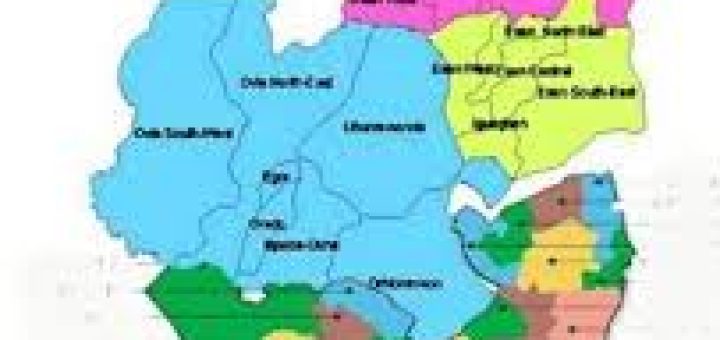
By Frank Ofili
It was a short, stirring piece by Norbert Chiazor this morning that set it all in motion. A quiet nudge to memory, a sudden swell of nostalgia, and an irresistible urge to put pen to paper on the subject.
Bendel State!
There was a time when the name carried more than geography—it carried a spirit. Bendel. It rolled off the tongue like a quiet promise, like something whole and self-assured. Before the lines were redrawn and identities split into Edo State and Delta State, there existed a place that was not merely an administrative convenience, but a living, breathing mosaic of peoples who understood—almost instinctively—how to belong together.
Bendel was not perfect. No place ever is. But it possessed a certain ease with itself, a cultural confidence that did not need to shout. From the ancient bronze-casting traditions of Benin to the rhythmic, riverine life of the Niger Delta, there was a quiet agreement that difference was not a threat—it was texture. It was identity layered upon identity, not in conflict, but in conversation.
And in that grand conversation stood the Anioma—those children of the west bank of the River Niger—a people whose very existence told a story of confluence. They were at once rooted and fluid, bridging worlds without losing themselves. In their speech echoed kinship with the East; in their civic life, a firm belonging to Bendel. They were interpreters of cultures, carriers of dual inheritances, yet unmistakably original.
The Anioma mind leaned naturally toward learning. Classrooms in Asaba, Agbor, Ogwashi-Uku, and even in idyllic Illah, were not just spaces of instruction; they were quiet forges of intellect. There was a seriousness about education, a disciplined pursuit of knowledge that produced teachers, administrators, thinkers—men and women who carried Bendel’s reputation for excellence far beyond its borders. To be Anioma was, in many circles, to be associated with thoughtfulness, articulation, and a certain measured confidence.
But they were not only thinkers; they were custodians of culture in its most adaptive form. Their festivals bore the elegance of tradition, yet their worldview embraced exchange. They understood, perhaps better than most, that identity need not be rigid to be strong. In the wider Bendel fabric, the Anioma presence was like a carefully woven thread—subtle, but essential, binding edges that might otherwise drift apart.
There was pride, too—quiet, assured pride. Not the kind that clamours for attention, but the kind that stands firm in self-knowledge. It showed in their names, their ceremonies, their insistence on dignity in public and private life. Within Bendel, the Anioma did not merely exist; they contributed a distinct intellectual and cultural rhythm that enriched the whole.
In Bendel, dignity was a shared currency. The trader in Warri, the farmer in Auchi, the fisherman along the creeks, the civil servant in Benin City—and the scholar from Anioma soil—they all moved with a certain pride, not loud, not boastful, but deeply rooted. Education was not just encouraged; it was expected. Discipline was not enforced; it was lived. There was a time when a Bendel indigene carried a reputation—of industry, of intellect, of composure—that preceded them into any room.
And then there was the culture of coexistence. Long before it became fashionable to speak of “unity in diversity,” Bendel embodied it. Languages danced side by side—Bini, Urhobo, Isoko, Itsekiri, Esan, Anioma dialects—each distinct, yet none diminished by the presence of the other. Festivals were not just ethnic markers; they were invitations. Food crossed boundaries. Marriages blurred lines. There was friction, yes, but it rarely hardened into fracture.
Governance, too, had its own rhythm. There was a sense—perhaps romantic in hindsight—that leadership carried a moral weight. Public service was not merely a route to personal gain but a platform for communal impact. The old Bendel civil service, often spoken of with reverence, stood as a symbol of order and professionalism, a machine that, more often than not, worked.
Then came the split. Necessary, perhaps. Inevitable, even. But something intangible was lost in the process—not just a name, but a shared memory, a collective identity that could not be neatly divided along new borders. Edo State and Delta State went on to find their own paths, to build their own narratives. Yet, in quiet moments, among those who remember, there lingers a soft, persistent ache for what once was.
Because Bendel was more than a place on a map. It was a temperament. A way of being. And in that memory, the Anioma remain—bridges of intellect and culture, proof that diversity, when anchored in mutual respect, does not weaken a people—it refines them.
And perhaps that is why it cannot be recreated. You can redraw boundaries, rename territories, restructure governance—but you cannot manufacture the subtle chemistry of a people who, for a time, simply understood how to live together.