America’s waning Power: The Iran War and the Cost of Overreach
104 views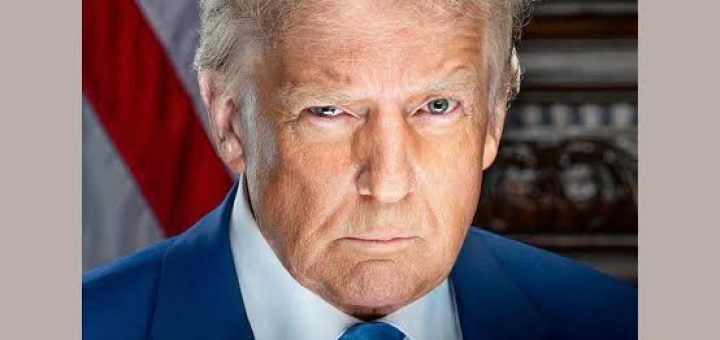
By Frank Ofili
For two months now I have watched and read, with the corner of one eye, the US-Israeli war on Iran, and I cannot but conclude that one of its most consequential, yet underappreciated casualties is not merely geopolitical stability in the Middle East—but also the very architecture of American global power itself.
Since World War II, America has projected an image of near-invincibility: militarily dominant, diplomatically influential, and capable of rallying allies into unified action. Yet, in this latest conflict with Iran, that image appears increasingly fragile. Despite deploying significant military, economic, and strategic resources against Iran, the outcome has defied expectations. Iran, far from capitulating, remains resolute—absorbing pressure while continuing to assert its regional influence.
Perhaps more telling than Iran’s resilience is the conspicuous absence of broad international support for Washington. Traditional allies like Japan, the United Kingdom, Germany, France, Spain, and indeed much of the European Union, have refrained from fully backing the United States in this confrontation. This silence is not incidental; it reflects a deeper unease about the direction, legitimacy, and potential consequences of the war.
The transatlantic alliance, once the bedrock of American global leadership, now shows visible cracks. That the U.S. President, Donald Trump is now threatening to withdraw thousands of American troops from Germany over Berlin’s reluctance to align with his Iran policy only deepen these fissures. Such a move, which I see as punitive, risks undermining NATO cohesion at a time when unity is already strained. Germany’s measured response that such a withdrawal would not be entirely unexpected suggests a recalibration of its own strategic assumptions about American reliability. To all intents and purposes, Trump, since his second coming, and more specifically, since this war on Iran, has been anything but predictable even to America’s traditional allies.
At the same time, the geopolitical reality remains unchanged in one critical respect: Russia and China stand firmly outside the American orbit on this issue, reinforcing a multipolar world where U.S. preferences no longer dictate global outcomes.
Compounding these external challenges are internal questions about leadership and strategic judgment. The conduct of the war on Iran has drawn criticism for its apparent lack of a clear endgame and its reliance on coercion over coalition-building. The result is a paradox: a superpower exerting immense force, yet struggling to translate that force into decisive outcomes or durable legitimacy.
Iran, for its part, has outlined a stringent 14-point conditions for returning to negotiations—conditions that signal confidence rather than desperation. Its willingness to prolong the conflict underscores a fundamental shift: the deterrent aura that once surrounded American power appears diminished.
History shows that great powers rarely recognize the moment their dominance begins to wane. Yet, moments like this—where military might fails to yield strategic success, and allies hesitate rather than follow—serve as unmistakable period of transition. This moment may yet signal America’s great decline, and it will be to the credit of Trump, a President who says his mission in his second coming is to “Make America Great Again” – MAGA for short.
This is not to suggest that the United States has ceased to be a global power. Far from it. But power, in the modern era, is as much about perception, legitimacy, and alliances as it is about wealth and armament, or military power. And on these fronts, the current trajectory raises difficult questions.
If there is a lesson to be drawn, it is that overreach carries is costly. The path forward for America may not lie in escalation or coercion, but in recalibration, recognizing limits, rebuilding trust with allies, and re-engaging adversaries through credible diplomacy.
In the meantime, a hard truth confronts Washington: Iran has not been subdued. Indeed, by enduring and resisting, it has achieved a form of strategic victory, at least for now.
For the United States, the wiser course may be to step back, reassess, and, however reluctantly, embrace a measure of humility. In doing so, it may yet preserve the foundations of its global influence before they erode further.