What Is President Trump’s End Game in Iran?
276 views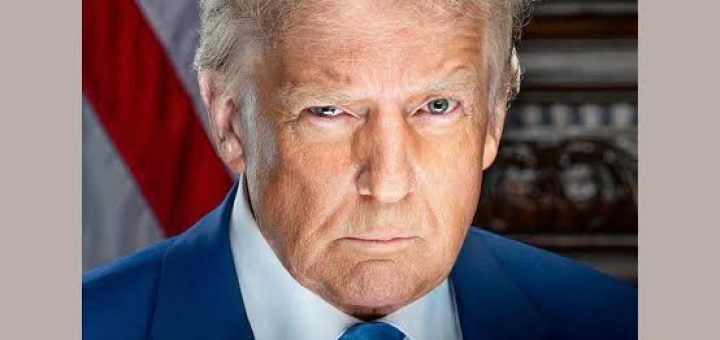
By Frank Ofili
What is US President Donald Trump’s end game in Iran?
What is his plan for ending this war? Surely, it cannot be to bomb Iran out of existence. That cannot happen.
The wisest warriors – and leaders – are the ones who know when and how to end a war, when to exercise restraint. Prudence is the watch word in war.
Trump has become increasingly shifty, incoherent, inconsistent, inconstant and uncoordinated.
Carl von Clausewitz, Prussian general and one of the most influential military theorists, whose ideas on the relationship between war, politics, and strategy has continued to shape military thinking and international relations, emphasized that war must serve political aims and that unclear objectives lead to prolonged conflict.
Colin Powell, former Chairman of the US Joint Chiefs of Staff and later Secretary of State, applied this idea through what later became known as the Powell Doctrine. The key principles of the Powell Doctrine are: military force should be used only for clear national interests, a clear political and military objective, public support, and definition of a clear exit strategy.
As Sun Tzu noted, “the supreme art of war is to subdue the enemy without fighting.”
Sun Tzu opined that the best victory is achieved through strategy, diplomacy, intelligence, and psychological advantage rather than battlefield destruction.
He further noted that “there is no instance of a nation benefiting from prolonged warfare” and that peace must be the ultimate goal of war.
So, I ask, what is Trump’s real goal in Iran? What are his military and political goals? Above, all, what is his road map to peace in Iran and in the Middle East?
From all indications, I do not think he has any. Or if he has, he has not properly defined it.
Trump has become increasingly shifty, incoherent, inconsistent, inconstant and uncoordinated. The guy keeps changing position. His entire security eggheads do not seem to know where he is driving them to. The world does not know what he is up to. Europe and the UK, America’s strongest allies, are not so sure of him. Even his Defense Secretary, Pete Hegseth, seems confused.
Trump says one thing and Hegseth says another. Seems senility is setting in – a very dangerous prospect for a Commander-in-Chief of the world’s most powerful Army. One can only hope the guy’s faculties are still intact.
If this war drags for another two weeks without a clear exit strategy, then I think it is time to invoke the 25th Amendment.
Yes, the 25th Amendment deserves to be invoked on a US President who is preoccupied with war, in peace time, without having a clear idea how to end it, a man whose only strategy for negotiation is bullying and threats. A leader with scant regard for processes and systems, who has quick recourse for the rule of the thump as his mood dictates at any point in time.
Yet that same President wastes no time in proclaiming his objective to be to secure America, and to secure World Peace for which, he says, he deserves the Nobel Peace Prize, whereas he does the exact opposite.
It is now time to question Trump’s motives. That question may have begun back home even as there is now division in his pet movement – the MAGA Movement – with some questioning America’s mission in Iran and how that mission makes America great. Anti-war-on-Iran protests have also erupted in parts of the US, including Washington, D.C., New York, Los Angeles, Chicago, San Francisco, Philadelphia, Seattle, Houston, and Minneapolis.
The 25th Amendment to the United States Constitution deals with presidential succession and the inability of a U.S. president to perform the duties of the office. It was ratified in 1967 after the confusion that followed the assassination of John F. Kennedy in 1963.
It is now time to question Trump’s motives.
It clarifies who becomes president or acts as president if the president dies, resigns, or becomes incapacitated.
The Amendment has four key sections:
- Vice President becomes President if the President dies, resigns, or is removed.
If a president leaves office, the Vice President becomes the full President, not just an acting one. Example: Lyndon Johnson became president after John Kennedy was assassinated.
- Filling a vacancy in the Vice Presidency.
If the Vice President’s office becomes vacant, the President nominates a new Vice President, who must be confirmed by a majority vote in both houses of Congress. Example: Richard Nixon appointed Gerald Ford as Vice President in 1973.
- Temporary transfer of power by the President.
The President can voluntarily declare inability to perform duties, temporarily transferring power to the Vice President as Acting President. This has happened during medical procedures, for example with George W. Bush during colonoscopies.
- Vice President and Cabinet declare the President unfit.
If the Vice President and a majority of the Cabinet believe the President cannot perform the duties of office, they can declare the President incapacitated, making the Vice President Acting President. This is section that should apply on Trump.
However, the President can contest the declaration. Then Congress decides, requiring a two-thirds vote in both chambers to keep the Vice President as Acting President.
In simple terms, the 25th Amendment ensures continuity of government if a U.S. president dies, resigns, or becomes unable to govern.
Is President Trump unable to govern? I think he has become untrustworthy globally. His words have become suspect, his actions unpredictable and his motives unclear, thus, raising profoundly disturbing questions about his political, mental and moral health.