When Bad Governance Meets a Badly Organised Opposition
110 views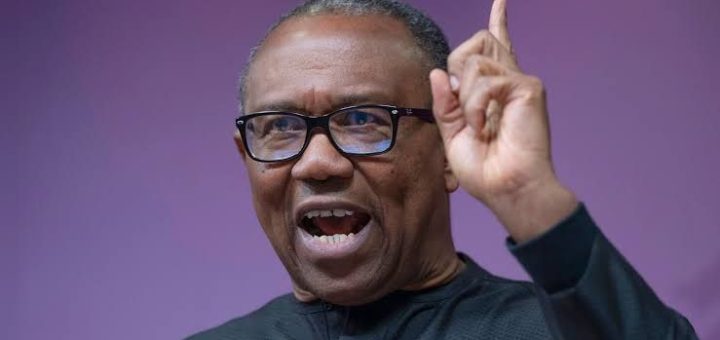
By Frank Ofili
In the run-up to the 2023 presidential election, I described Peter Obi, the Labour Party presidential candidate at the time, as a shop economist. It was not a compliment. My argument was that Obi had a proclivity for thinking micro, like a trader or shopkeeper who worries about the price of goods, the cost of running his shop, and the need to balance his books. I doubted whether that mindset was adequate for managing the complexities of an economy as vast and diverse as Nigeria’s.
Three years into President Bola Tinubu’s economic experiment, however, I am beginning to wonder whether we would have been better off with a shop economist after all.
Let me be clear: this is not an endorsement of Peter Obi. It is a lamentation of the economic abyss into which Tinubu’s government appears to have plunged the country. Sometimes, you do not need a sophisticated economic theory to know that something is wrong. When the cost of living becomes unbearable, purchasing power evaporates, businesses struggle to survive, and millions of citizens find themselves running faster merely to remain in the same spot, perhaps we need someone who understands the economics of the neighbourhood shop.
Obi may need to reconsider his political arithmetic. Politics is not an economics classroom where a candidate gets full marks for fiscal discipline. It is also an enterprise of relationships, negotiation, coalition-building, and the management of competing interests.
At least, a shopkeeper knows that you cannot continually increase the price of your goods and expect customers to keep buying. He knows that a business can record impressive turnover and still go bankrupt if its customers can no longer afford its products. He also understands that when the money in people’s pockets shrinks, the market does not become more prosperous simply because the price tags have become bigger.
Perhaps, just perhaps, there is wisdom in that kind of economic thinking.
But my reservations about Obi have not disappeared. If anything, I have discovered another weakness that could prove even more consequential than his supposed economic parochialism: his apparent inability to retain friends, keep his followers together, and weld the centrifugal forces around him into one formidable, disciplined political movement. This is in sharp contrast to Tinubu’s skill in pulling centripetal forces together, even if by arm-twisting and jiggery pokery.
Obi seems to win supporters with relative ease but lose them with alarming frequency. I can think of several prominent Nigerians who were enthusiastic members of his political fan club before the 2023 election, but who have since fallen away. Some have moved on; others have become critics. The question is: why does a man who inspires such fervent loyalty appear to struggle to sustain it?
Perhaps it is because he does not “give shi shi” — that wonderfully Nigerian expression for refusing to part with money, even when the occasion might demand it. If that is indeed part of the problem, Obi may need to reconsider his political arithmetic. Politics is not an economics classroom where a candidate gets full marks for fiscal discipline. It is also an enterprise of relationships, negotiation, coalition-building, and the management of competing interests.
To be president of a country as diverse, fractious, and politically transactional as Nigeria, you must do more than inspire a crowd. You must be able to hold a coalition together. You must accommodate differences without surrendering principles, reward loyalty without institutionalising patronage, and build a political structure that survives beyond the excitement of a campaign.
A movement that depends excessively on the personal enthusiasm of its followers may fill stadiums, dominate social media, and generate impressive electoral numbers. But unless it can organise, negotiate, retain talent, and manage internal disagreements, it may struggle to convert enthusiasm into political power.
This is where Obi’s challenge lies. A presidential ambition is not sustained by moral posturing, good intentions, or the occasional viral sound bite. Neither is it enough to insist that one is different from the established political class. At some point, the candidate must demonstrate that he can manage people, interests, institutions, and the inevitable contradictions of power.
My main grouse with President Tinubu is the smokescreen, opaqueness and intransparency that characterise his economic management.
And this brings me to my rather uncomfortable prediction: despite what I consider the poor economic performance of President Tinubu’s government, I believe he could still win re-election.
Why? Because Nigerians are not ready for true democracy and free and fair election. Also, elections are not won on economic performance alone. They are won through political organisation, alliances, structures, resources, strategic calculations, and the ability to keep one’s political house in order. On these measures, Tinubu is a formidable operator. He understands the mechanics of political power and has spent decades mastering them.
Obi, by contrast, may discover that the enthusiasm of 2023 is not a permanent political asset. A crowd is not necessarily a constituency, a fan base is not a party structure, and trending on social media is not the same thing as winning an election.
As for Atiku Abubakar, his perennial presidential ambition increasingly gives the impression of an itinerant political project: forever on the road, forever seeking the destination, and forever returning to the starting point. His experience is not in doubt, but experience alone does not automatically translate into electoral viability.
Of course, Tinubu’s re-election is not inevitable. Nigeria’s economic circumstances could alter the political equation, and opposition forces could yet surprise us if they learn to subordinate personal ambition to collective purpose. But that is precisely the problem: can they?
The tragedy is that Nigerians may find themselves choosing not between a good government and a bad one, but between a government whose economic record invites serious questions and an opposition that struggles to convince the electorate it can organise itself well enough to offer a credible alternative.
And so, the man I once dismissed as a shop economist has inadvertently acquired a new selling point. Perhaps a shop economist who understands the economics of ordinary Nigerians would have been preferable to an economic reformer whose policies have yet to deliver sufficient relief to the people.
But let nobody mistake my lamentation for an endorsement of Obi-Kwakwanso ticket. Obi still has political homework to do. He must demonstrate that he can build and sustain a coalition, not merely inspire one. Tinubu, meanwhile, must understand that political mastery cannot permanently substitute for economic relief. He cannot keep claiming that the sub-nationals are getting more money, yet the people are getting worse off, and his federal government cannot fund its budgets for three running now. That is a huge contradiction. My main grouse with President Tinubu is the smokescreen, opaqueness and intransparency that characterise his economic management.
In the final analysis, a country is neither a shop nor a political campaign office. It is a complex enterprise requiring sound economic judgment, competent administration, political dexterity, and a genuine understanding of the people whose lives government policies affect.
The irony is that Tinubu may yet win another term not because Nigerians are satisfied with his economic management, but because his opponents may prove incapable of turning public dissatisfaction into a coherent electoral alternative.
And that, more than anything else, is the tragedy of Nigerian politics: a government may be unpopular and still be difficult to defeat, not because it has governed well, but because those who want to replace it have not learnt how to stand together.