Did God Create Nigeria Differently?
277 views
By Frank Ofili
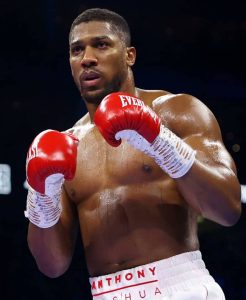
I find myself unconsciously asking this question everytime I hear someone mutter these phrases – like I have been reading such cynical remarks from some people since the news of the fatal car crash of boxing heavyweight, Anthony Joshua broke.


“This is Nigeria, where anything is possible.”
“May Nigeria not happen to us.”
“Nigeria we hail thee.”
They roll easily off the tongue. Said with a shrug. With a laugh. With sarcasm sharp enough to draw blood. They are jokes, we say. Coping mechanisms. Street wisdom. But beneath their casual cruelty lies something darker: a quiet, collective resignation that something about Nigeria—and Nigerians—is fundamentally flawed.
Sometimes one is tempted to ask the forbidden question: Did God create Nigeria differently from the rest of the world? Did He mould Nigerians from another clay, less durable, less noble, less deserving of order and justice?
Because how else do we explain the ease with which we mock our own existence?
No one says, “This is Germany, where anything is possible,” when a system fails. No one prays, “May America not happen to us,” when a train runs late. No one salutes Britain with biting irony after a scandal. But Nigeria—Nigeria has become shorthand for chaos, for disappointment, for the normalization of the abnormal.
Yet God, we are told, is not a respecter of persons.
The same God who painted the Alps also carved the Niger.
The same breath that animated Europe breathed life into Africa.
The same divine spark that burns in Tokyo and Toronto burns in Aba, Akure, and Ado-Ekiti.
So where did it all go wrong?
Perhaps the tragedy of Nigeria is not that God created us differently, but that we have been conditioned—slowly, painfully—to believe that we are different in the worst way. That we are doomed to dysfunction. That excellence is foreign. That order is unnatural. That progress is suspicious.
“This is Nigeria” has become a coffin lid on our expectations.
We say it when hospitals fail the sick.
We say it when leaders loot with impunity.
We say it when merit is punished and mediocrity rewarded.
Each time we say it, something inside us dies—quietly.
“May Nigeria not happen to us” is even more damning. It is a prayer of exile from ourselves. A wish that our own identity does not follow us. As though being Nigerian is a curse to escape rather than a burden to fix. It is the ultimate surrender: the belief that the best solution to Nigeria is distance from Nigeria.
And “Nigeria we hail thee,” once a patriotic salute, is now often delivered with a smirk—an anthem stripped of faith, recited like an inside joke among the disillusioned.
But here is the uncomfortable truth: God did not fail Nigeria.
God gave Nigeria brilliance—scientists, writers, doctors, engineers who thrive anywhere else in the world.
God gave Nigeria resilience—people who survive conditions that would break others.
God gave Nigeria abundance—land, talent, culture, spirit.
What failed Nigeria is leadership without conscience.
What failed Nigeria is systems built to serve a few and suffocate many.
What failed Nigeria is our gradual acceptance of the unacceptable.
And perhaps most painfully, what failed Nigeria is how often we have learned to laugh at our wounds instead of demanding healing.
Still, hope refuses to die completely.
Because the same Nigerians who mock the country are the ones who rebuild after every collapse.
The same mouths that say “This is Nigeria” still whisper prayers at night.
The same people who joke cynically still line up under the sun to vote, to hustle, to survive.
If God created Nigerians differently, then perhaps it was to endure more—and to rise harder.
But endurance alone is not destiny.
The day Nigerians stop using those phrases as excuses and start treating them as indictments—questions demanding answers—is the day the narrative begins to change.
Until then, the real tragedy is not that Nigeria is mocked by the world.
It is that Nigerians have learned to mock themselves—and call it wisdom.
And God, watching from above, may not be asking why Nigeria is like this. He may be asking when Nigerians will finally believe they deserve better—and act like it.