BUHARI’S ADMINISTRATION: ONE YEAR ON
597 views

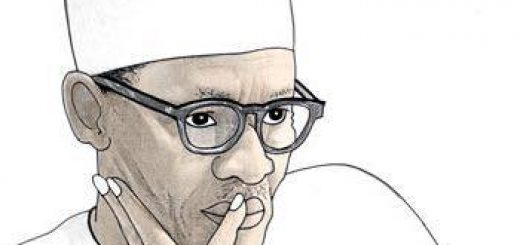
President Muhammadu Buhari
BUHARI’S ADMINISTRATION: ONE YEAR AFTER
In the next 48 hours it will be one year Muhammadu Buhari, former army general and military head of state, was sworn-in as democratically elected President of the Federal Republic of Nigeria. Although he has a four-year mandate, an evaluation of his tenure so far in Aso Rock is not out of place, especially given the fact that his is the first ever federal transition from a ruling party to an opposition party in Nigeria.
But how does one even begin to evaluate the austere ramrod retired army general’s Presidency without laying some parameters?
In the past two weeks this writer has engaged five upcoming entrepreneurs and technocrats with a view to evaluating the All Progressives Congress’s (APC) federal government headed by President Muhammadu Buhari. Buhari’s one-year in office is here measured on five parameters. All parameters have been allotted equal marks as given below:
The Economy 20
Security 20
Anti-corruption 20
Foreign Policy 20
The Political System/Citizen Engagement 20
The challenges are also examined. Here we go.
THE ECONOMY
No doubt, the Buhari administration inherited a comatose economy characterized by epileptic power supply, energy crisis occasioned by a corrupt fuel subsidy regime, high exchange and interest rates, unemployment, inflation, huge external debt profile, and a declining crude oil revenue among other challenges. The administration however inherited some assets such as a robust and developing agricultural sector, a rebased economy classified as one of the fastest growing economies in Africa – whether real or superficial is beyond the purview of this assessment. Also, though high, the exchange rate was relatively stable.
Today however, the energy crisis has not completely abated even as government has jerked up pump-price of fuel. Power sector has also gone from bad to worse. What is more, electricity tariff has been jerked up without a commensurate increase in power supply. The consolation however is that a hitherto vexatious fixed charge has been removed but that has done nothing to improve power supply. Infrastructures such as roads and rails remain comatose, though there are indications that government would soon pay attention to them if the just released 2016 Appropriation Act is anything to go by. Also education and healthcare sectors have gone worse. In fact, there is hardly an indication that there is a Minister of Education. The crash in global crude oil price has not helped matters even as the government seem unsure how to manage the situation. While unemployment is worsening, exchange rate, lending rate and inflation rate have all shot through the roof at N337 (parallel market), 11% and 13.4% respectively. The CBN keeps churning out staccato policies that have done nothing to address the free fall of the Naira. The manufacturing sector of the economy has remained at the nadir as manufacturers’ access to foreign exchange to import critical raw materials, machines and spares has become near-impossible. Worse is that the government has rolled out a list of 41 items it has prohibited from access to foreign exchange at official rate. These challenges have more or less asphyxiated the economy. Added to all these is the absence of a clear economic policy vehicle to drive the economy to the desired destination.
But brighter days seem to lie ahead as the government has just released the first tranche of N350 billion to reflate the economy. To reduce the demand for dollar, the government has entered a currency swap agreement with China so that imports can be paid directly in the Chinese Yuan. On infrastructural development, the government has directed the release of funds to kick-start work on the collapsed Onitsha-Enugu federal high-way in addition to resuming work on the second Niger Bridge. But the President needs to do more by setting up a small team of no more than 7 experts to advise him on the economy from time to time and proffer suggestions. The team should of necessity include representatives from Organised Private Sector as opposed to their total exclusion in the Economic Council. Lastly on the economy, ministers should be given quarterly targets on deliverables and anyone of them not measuring up should be shown the exit door pronto.
Overall score of the government on economic management is 8 out of 20 management.
SECURITY
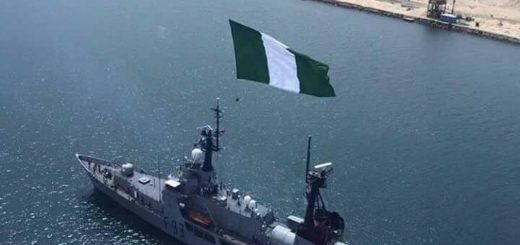
Security challenges on inauguration of the government of President Buhari on 29th May 2015 was very daunting. Boko Haram had overrun and taken some parts of the northeast of the country. The sect was set to conquer more territories and impose its authority.
Today however, no one can take away from the Buhari administration the credit of having defeated the terrorist sect. There is no doubt that the spirit and soul of Boko Haram has been dealt a fatal blow. Whether that defeat is “technical” (as postulated by Information Minister Lai Muhammed) or wholesale is left to conjectures. The fact remains that from controlling about 14 local governments in northeast Nigeria prior to President Buhari’s inauguration last year, the terrorist sect no longer controls any. Its membership has been decimated and sent scampering. Sambisa forest, its operational headquarters has been invaded and levelled, its camps destroyed, towns hitherto under its control have been liberated. Two of the 274 teenage school girls kidnapped at Chibok in 2014 have been rescued. Today, the exodus is no more out of northeast Nigeria to neighbouring states/countries but in fact back into that region as hitherto displaced people return home.
How did the government achieve this feat? First was the marching order the President gave to service chiefs to relocate their command control centre to the theatre of war and command their troops from there. Next was the outflanking of the enemy by forging strategic alliance with neighbouring countries of Cameroun, Niger and Chad. This effectively cut off the supply routes of the terror sect.
There were also the diplomatic forays to the United States and other Western countries where the President secured without much noise military assistance in terms of new equipment, weapons and other instruments of operations. Added to these was the sacking, arrest and prosecution of immediate past service chiefs for corruption.
All these impacted on the motivation of the soldiers to fight with renewed spirit. There is no doubt that President Buhari’s pedigree as a combatant soldier and war-tested general has helped in the successes the military has recorded against Boko Haram. Indeed, the President seems aware that given his background, no one would forgive him if he failed to defeat Boko Haram. Expectedly, the President rose to the challenge.
But the menace of the roving killer herdsmen appears set to put spanner in his works. Across the country, mass killings by cattlemen are on the upsurge as they attack and sack entire communities killing hundreds and maiming many more. The President’s response to this scourge of the roving killer herdsmen has been disappointing. His response to the Agatu massacre for example was below expectation.
Election violence also remains high as attested to by the Kogi and Rivers State re-run elections. Kidnapping has also shown no sign of a abatting. Added to this is the return of militancy in the Niger Delta region. A new militant group known as Niger Delta Avengers has in the past couple of months blown up strategic oil and gas pipelines.
On 25th May, the militants blew up an underground crude oil trunk line at Escravos in Warri South West Local government Area of Delta. The oil installation is owned by Chevron Nigeria Limited. Earlier on 20thMay, a gas pipeline running from Ogbe Ijoh to Escravos also in Warri South-West Local Government Area was blown up. In January, the gas pipeline conveying gas from Escravos-Warri-Lagos-Abuja was also blown up. And in February the same pipeline which is part of Nigerian Gas Company’s Phase II of the Escravos-Lagos gas pipeline was again seriously damaged by the militants. The militants had also blown up a Valve Platform, an offshore oil facility belonging to Chevron Nigeria Limited located near Escravos.
All these attacks have taken a heavy toll on the energy generation capacity of the country.
It has also adversely affected the country’s crude oil export capability, which has fallen from 2.2 million barrels per day to about 1.4 million – a daily loss of about 800,000 barrels of crude oil.
Despite these challenges however, there can be no disputing the fact that on the security front, the Buhari administration has recorded commendable achievement. The government is scored 15 out of 20 on security.
ANTI-CORRUPTION
The war on corruption is Buhari’s greatest strength, and it is not for nothing. The retired army general is known to have a strong aversion for corruption. In his first sojourn on the seat of power as military head of state (1984 – 1985) he prosecuted the war on corruption with uncommon vigor. He is doing no less as democratically elected president.
Since Buhari’s inauguration as President on 29th May 2015, he has demonstrated commitment to his electoral promise to prosecute corrupt officials and recover Nigeria’s stolen wealth.
To this end, hitherto moribund anti-graft agencies such as the Economic and Financial Crimes Commission (EFCC), the Code of Conduct Bureau and Code of Conduct Tribunal have been given a new fillip to enable them live up to their responsibilities. EFCC has arrested, quizzed and are currently prosecuting some principal actors of the last administration for corrupt enrichment. Chief among them is the former National Security Adviser, Col. Sambo Dasuki (retired) who is being tried for laundering of $2.1 billion meant for purchase of arms to prosecute the war on Boko Haram terrorists. Some other actors in the last administration have also been reigned in while a few more have fled the country to escape arrest and prosecution. It is believed that billions, if not trillions of Naira, has been recovered. The President has promised to disclose the amount so far recovered. Bukola Saraki, Senate President, the country’s No. 3 man and member of the ruling party, is also being prosecuted at the Code of Conduct Tribunal for false asset declaration while he was governor of Kwara State.
President Buhari’s war on corruption has earned him local and international accolades. For instance, United Nations Office on Drugs and Crime (UNODC) Executive-Secretary Yury Fedotov, noted that “the commitment of President Buhari to eradicate corruption is a very important asset for us in UNODC as the guardian of the UN Convention Against Corruption.’’
In October 2015, the African Union Advisory Board on Corruption unanimously adopted Buhari as the continent’s preferred leader to lead a vigorous anti-corruption war to rid Africa of corruption. According to them, the present administration’s efforts at fighting corruption have earned Nigeria international respect.
The President has also entered into agreements with some foreign countries with a view to helping to track and repatriate Nigeria’s looted wealth. There is a new confidence being exhibited towards the country by the international community, as country after country express willingness to help Nigeria come out of the woods. Buhari walks major capitals of the world with dignity, grace, respect and his head held high. This is not surprising given that many erstwhile smart alecs and high- profile syndicates have been busted and leakages plugged. He has dealt a deadly blow to the fuel subsidy cabal, something that was near impossible in the past.
There is however scepticism in some quarters that the war on corruption is lopsided. Some people allege political witch-hunt, even as they point to some of the President’s party leaders and cabinet members whothey allege are corrupt but are walking free. Specifically, they allege that Bola Tinubu and Rotimi Amaechi looted public funds to finance the President’s election. None of these allegations however has been supported with facts.
Nigerians want to see expeditious trials. For this, some accuse the President of being more interested in media prosecution than actual court trials. He is also accused of not paying attention to details on delicate matters – a situation that resulted in the 2016 budget-padding.
There is also the view that the President needs to do more in terms of deepening and institutionalizing the anti-corruption war in terms of eliciting buy-in from the Legislature, Judiciary, government Ministries, Departments and Agencies, state and local governments as well as the private sector.
These short-comings notwithstanding, nobody can deny the fact that the President has been courageous in tackling corruption in governance. For this he scores 16 out of 20.
FOREIGN POLICY
Aside President Olusegun Obasanjo, no past Nigerian leader, dead or living, beats President Buhari in the utilization of shuttle diplomacy to earn Nigeria the much desired respect. Buhari’s diplomatic forays in the fight against terrorism, corruption, sea piracy, crude oil theft, and pursuit of economic partnership and regional and sub-regional peace and security has not gone unnoticed across the globe. Perhaps this was what informed the first ever public acknowledgment from a sitting US President that an African President is "doing a very good job". Noteworthy is the fact that President Obama himself has now made a commitment to visit Nigeria before he leaves office. Obama had shunned Nigeria in his Africa trips all through the Yar Adua and Jonathan years in Aso Rock.
But how solvent has been Buhari’s foreign policy? Perhaps that would be reflected in the nation’s economic, political and military wherewithal in the years to come. For now it is safe to conclude that his foreign trips have focused on three mains areas – strengthening partnership against terrorism, forging collaboration against corruption and economic cooperation.
Speaking to newsmen in Lagos while on inspection of the Nigerian Institute of International Affairs (NIIA), Geoffrey Onyeama, Minister of Foreign Affairs summed up the benefits of Buhari’s foreign trips thus: “there are three immediate, concrete dividends from his trips. One is security. He was able to galvanise neighbouring countries after election to joining the multinational joint task force, and they were able to tame the tide of terrorism posed by Boko Haram…..Also, some countries had lost faith and confidence in Nigeria and had stopped supporting us. Through his visits to those countries, the President was able to convince them about the credibility and bona fides of his administration. Many of them are now sharing equipment and intelligence with us, which they weren’t doing before….On the economy, he has been able to mobilise, through his visits, countries like Qatar, China and others to commit to more investments in the country.”
However, President Buhari does not have to travel all the time. His vice, Professor Osinbajo is equipped enough to do some of the travelling on his behalf. Nevertheless, the President scores 15 out of 20 on foreign policy.
THE POLITICAL SPACE/CITIZEN ENGAGEMENT
Just as the President is positively engaging the international community, he also needs to engage Nigerians in like manner. But it appears this is perhaps his Achilles heel. The President seems not skillful enough in engaging the people on important government decisions. Worse he has a weak information and communication team. His media aides appear inexperienced while the Information minister carries on as if he were still the APC spokesman. The divergent and sometimes contradictory statements from government sources sometimes confuse the people. The government needs to engage the people on critical national issues. The new price regime for premium motor spirit (PMS) otherwise known as fuel is one example.
First is that the government never really engaged or sensitized Nigerians on the necessity to remove fuel subsidy. Neither was subsidy payments provided for in the 2016 budget. So when the government announced a new pump price of N145 per litre for PMS many Nigerians believe subsidy has been removed. Yet in a statement tilted “The Fuel Pricing Debate: Our story”, Vice President Prof Yemi Osinbajo said that “….what the government did was to withdraw the monopoly hitherto enjoyed by the Nigerian National Petroleum Corporation, NNPC to allow free market sales. He said that “at $40 a barrel, there isn’t much of a subsidy to remove.” The Vice President further said that the decision to adopt a new measure was essentially informed by the non-availability of foreign exchange for the independent marketers to import fuel.
Similarly, Information and Culture Minister of Information, Alhaji Lai Mohammed, while addressing the Advertisers Association of Nigeria (ADVAN) Marketers Conference stated that “….the new fuel price regime should not be misconstrued as the removal of subsidy since there is no provision for subsidy in the 2016 Appropriation”. Still the question remains, if there is no provision for subsidy payments in the 2016 why are government officials saying subsidy has not been removed? To be sure, removing fuel subsidy is not a bad economic decision in itself, but the people ought to be carried along. Occasional town hall meeting with stakehlders is seriously recommended.
Secondly, the government has to fashion out a way to galvanize the people to line up behind its policies and programs. The anti-corruption crusade demands that a national value re-orientation in which the National Orientation Agency has a great role to play is urgently needed.
Thirdly, the frosty relationship between the National Assembly and Aso Rock on the one hand, and between Aso Rock and the leadership of the ruling party on the other, needs to be addressed and put to rest once and for all without compromising the integrity of the government.
Finally, strident calls for restructuring the federation along regional lines in the spirit of true fiscal federalism, have recently rented the airspace. The calls obviously emanate out of the consequence of our extant federal system which some have termed “feeding bottle” federalism. They say the resumption of militancy in the Niger Delta and the Biafra agitation make restructuring an urgent national concern.
In as much as restructuring the federation is desirable, it will be unfair to blame Buhari administration for all that is wrong with the federation. There were governments before Buhari and they didn’t tinker with the federation. Besides, those making those calls fail to understand that what they are asking for does not really lie with the President but with the National Assembly. It would have made better sense if these people are calling on the President to submit to the National Assembly the report of the last national confab which President Jonathan had put in the cooler with the intention to use it as a bargaining chip in his re-election bid.
Nevertheless, there is nothing inherently wrong if the Buhari administration toils with the idea of some sort of political restructuring, except that that would be one too many, and certainly not in his first year in office as such is not a priority in these times.
All in all, the government is scored 7 out of 20 on citizen engagement.
CONCLUSION
In the face of daunting challenges, there is no doubt that the Buhari administration is trying its best. However, there is much more to be done, especially on the economy front. The prospects and potentials are there to do much more. Dismantling administrative controls to open up the economy for more private sector participation is critical for national economic success. At the end of the day it is the health of the economy that would be used to judge his success or failure.
But he also needs to continue on the path of the anti-corruption crusade. In this regard, a sort of institutional framework should be put in place to deepen the fight against corruption, and engage the citizenry in national value re-orientation. Prosecution of the indicted should be speeded up. Aso Rock must somehow arrive at some sort of rapprochement with Biafra agitators and the oil bearing communities without appearing to capitulate to the criminality of pipeline vandalism currently playing out in that region. It seems somehow these people feel alienated. All the more reason citizen engagement is critical at this point in time. Perhaps it will nice to look again at the Niger Delta Development Commission (NDDC) with a view to increasing its funding and making it more efficient and effective. Or better still, transfer ownership of the NDDC to the governments of the oil producing states so that they would be held accountable for its success or failure.
Lastly, the menace of the roving killer herdsmen must be addressed decisively, as should the war on Boko Haram. It is not out of place to assume that the cattle-rearing community has been infiltrated by the terrorist sect. So, a process must be initiated now to identify and if possible register all cattle owners so that they can be held accountable for any act of criminality by herdsmen on host communities. The country certainly cannot afford the dangers posed by possible reprisal attacks. Book Haram is enough headache. National Security cannot be toiled with as no real foreign investment would come in if security cannot be guaranteed.
Overall performance of the Buhari administration in his first one year in office can be summed up thus: Economy 8%, Security 15%, Anti-corruption 16%, Foreign Policy 15%, and Citizen Engagement 7%. Overall performance 61%. Not so bad.