The Hunters Become the Hunted: Trump, Natenyahu and Iran’s Strategic Vindication
2 views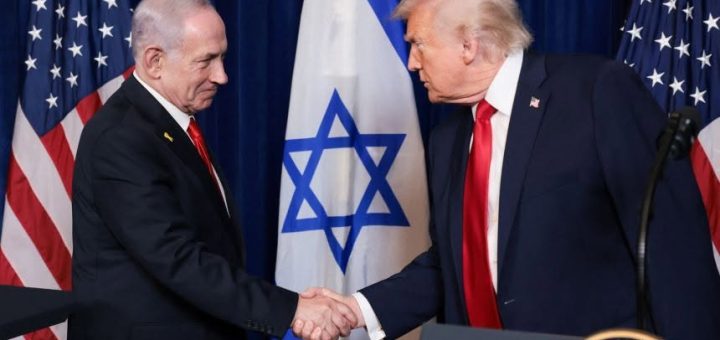
By Frank Ofili
Sometimes, the greatest victory is surviving the people who came to destroy you.
There is a peculiar irony in international politics: those who set out to determine the destiny of other nations occasionally end up struggling to preserve their own political fortunes. The unfolding developments in Washington and Jerusalem provide a compelling illustration of this political paradox.
Six months ago, Donald Trump and Benjamin Netanyahu appeared convinced that Iran could be brought to its knees through overwhelming military force. Their campaign was predicated on the assumption that the destruction of strategic infrastructure, the elimination of military commanders and the assassination of Ayatollah Ali Khamenei would trigger a political domino effect, destabilise the Islamic Republic and ultimately produce regime change.
The two men who sought to reshape Iran’s political destiny through military force are now grappling with the consequences of their own strategic miscalculations.
It was an ambitious geopolitical gamble. But the expected political dividends have proved considerably more elusive than the military objectives.
Iran has suffered enormous losses. Its military infrastructure has been damaged, its strategic capabilities degraded and its leadership subjected to devastating attacks. Yet the political system that was supposed to collapse remains standing. The anticipated regime change has not materialised.
That is the fundamental strategic miscalculation.
The irony becomes even more striking when one considers the political developments in the countries that initiated the confrontation.
In the United States, Trump’s Republican Party suffered a major electoral setback in the November 3 midterm elections, losing control of both chambers of Congress. The economic consequences of the war, particularly concerns over fuel prices and the cost of living, contributed to the administration’s political difficulties. Trump, who had presented himself as a decisive leader capable of imposing American strategic objectives, now faces a considerably more hostile domestic political environment.
In Israel, Netanyahu’s political fortunes have suffered an equally consequential reversal. His governing coalition lost its parliamentary majority in the October 27 elections, and President Isaac Herzog subsequently gave Gadi Eisenkot the first opportunity to form a government.
Netanyahu, who once appeared politically indispensable, now finds himself confronting the prospect of losing power.
How quickly the political weather changes!
The two men who sought to reshape Iran’s political destiny through military force are now grappling with the consequences of their own strategic miscalculations. One has lost congressional control; the other has lost his governing majority. Their political setbacks do not necessarily extinguish their influence, but they have undoubtedly complicated their ambitions.
For Iran, this is what I would describe as a technical victory.
Not because Tehran has won every military engagement. It plainly has not. Not because its adversaries have suddenly become powerless. They remain formidable military powers. But because the principal political objective of the campaign—the dismantling or transformation of the Iranian political system—has not been achieved.
In geopolitics, survival under existential pressure can itself constitute a strategic accomplishment.
There is also a significant implication for the future of the Middle East. Eisenkot’s prospective coalition government will have to navigate a complicated parliamentary landscape, potentially involving Arab parties. This does not automatically make Israel less hawkish toward Iran, but it introduces additional political constraints that could complicate another major military adventure.
History has a particularly mischievous way of humbling those who mistake military superiority for political omnipotence.
The lesson is not that Iran has become invincible. It is that military superiority has limits, and political systems cannot always be demolished through the application of brute force.
Trump and Netanyahu may have imagined that Iran was a house of cards waiting to collapse at the first decisive blow. Instead, they encountered a political establishment capable of absorbing extraordinary punishment without surrendering its institutional foundations.
That is the tragedy of strategic arrogance: the certainty that one’s adversary is weaker, less resilient and less sophisticated than reality eventually reveals.
Perhaps the most instructive irony of this entire episode is that the political leaders who sought to demonstrate their power through the destruction of another country’s political system are now confronting the fragility of their own political fortunes.
Power is transient. Political relevance is not guaranteed. And history has a particularly mischievous way of humbling those who mistake military superiority for political omnipotence.
Sometimes, the victory parade belongs not to the conqueror, but to the nation that refused to collapse.
Iran may not have won the war in the conventional sense. But if the objective was to destroy its political system and erase it from the strategic map of the Middle East, then Tehran’s survival represents something considerably more consequential than a mere military footnote.
It represents the failure of an ambitious geopolitical project.
And in the unforgiving arithmetic of international politics, that may be the most consequential defeat of all.