Failed Federal Roads: Whither State Governments?
130 views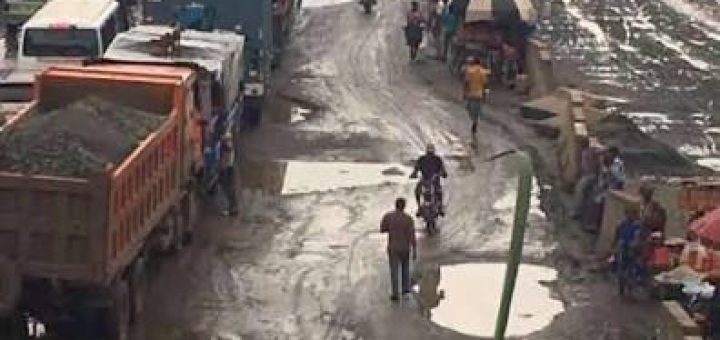
(By Frank Ofili)
Bad enough that federal roads across Edo, Delta and other parts of the South-South and South-East have deteriorated to the point where ordinary movement has become a nightmare. Bad enough that the Federal Government appears to have failed woefully in one of its most basic responsibilities: maintaining the federal road infrastructure upon which millions of Nigerians depend every day.
But there is another question we must ask, and it is a question that state governments cannot continue to evade: Where is the emergency response plan of the states?
Are the governors telling us that because a road is classified as a federal road, they have absolutely no responsibility to the citizens who use it? Are they saying that when a federal road develops dangerous potholes, collapses completely or becomes impassable, the only thing they can do is write letters to Abuja, issue press statements and wait indefinitely for the Federal Government to act?
What happens to the citizen who falls into a pothole today? What happens to the pregnant woman whose vehicle cannot pass? What happens to the commercial driver whose vehicle is destroyed? What happens to the farmer whose produce cannot reach the market? What happens when a failed portion of a road becomes a death trap?
Government cannot be reduced to the convenient excuse of jurisdiction.
Yes, the Federal Government has the primary responsibility for federal roads. There is no argument about that. But governance is ultimately about protecting lives, facilitating economic activity and responding to emergencies. When infrastructure under federal control collapses within a state, the state government may not own the road, but the people stranded on that road are its citizens.
This is where the governors must demonstrate leadership.
If a federal road has collapsed, what prevents a state government from grading a dangerous section temporarily? What prevents it from providing alternative access where possible?
The road may belong to Abuja, but the people belong to the states
What prevents it from deploying emergency traffic management, installing warning signs, improving drainage, filling dangerous potholes as a temporary measure, or undertaking other remedial interventions while aggressively pursuing reimbursement or federal intervention?
Instead, we often see governments hiding behind jurisdictional boundaries while citizens suffer.
And this is particularly troubling at a time when Nigerians have been told that states are receiving substantially more resources. The argument has always been that greater resources should translate into better governance and improved public services. Then surely some of those resources should be deployed to respond to emergencies that directly threaten the lives and livelihoods of the people.
Nobody is asking state governments to permanently take over the Federal Government’s constitutional responsibility. Nobody is saying states should abandon their own roads, schools, hospitals or other responsibilities.
The question is much simpler: when there is an emergency, what does a responsible government do?
It acts.
It does not spend weeks explaining why it cannot act.
It does not tell citizens, “It is a federal road.”
It does not watch helplessly as businesses lose money, commuters waste hours, vehicles are destroyed and lives are endangered.
There must be a culture of emergency governance in Nigeria.
A governor should be able to say: “This road may belong to the Federal Government, but these people belong to us. Until Abuja fixes it, we will do what we can to keep our people moving and keep them safe.”
That is leadership.
Indeed, state governments should establish Emergency Infrastructure Response Funds specifically for situations such as collapsed roads, failed bridges, flooding, erosion and other infrastructure emergencies.
Such interventions can be temporary and without prejudice to ownership or constitutional responsibility. The state can subsequently seek reimbursement, partnership or intervention from the Federal Government.
What matters first is the citizens.
We cannot continue to build a system of government where every tier points to another tier whenever something goes wrong. The Federal Government blames the states. The states blame Abuja. Local governments blame the states. Meanwhile, the citizen is left stranded in the middle.
That is not governance.
The Constitution may divide responsibilities between different levels of government, but the suffering of the citizen does not recognise constitutional boundaries.
If a road in Edo is killing people, it is an Edo problem.
If a road in Delta is crippling businesses, it is a Delta problem.
If a road in Anambra, Enugu, Abia, Imo or any other state has become impassable, it is a problem that demands the attention of the government closest to the people, even when the Federal Government bears ultimate responsibility for the road.
And let us be clear: state intervention does not absolve Abuja of its responsibility. Quite the contrary. State governments should intervene while simultaneously holding the Federal Government accountable, demanding reconstruction and insisting that federal agencies do their jobs.
But leadership requires more than assigning blame.
If a state government cannot provide even basic remedial measures when a major road within its territory collapses—whether federal or state-owned—while its citizens are stranded and economic activity is being strangled, then we must seriously question what we mean when we call that administration a government.
Government is not merely about collecting revenue, paying salaries, commissioning projects and making speeches.
Government is about responding when its people are in trouble.
And sometimes leadership means fixing what you are not legally obliged to fix—not because it belongs to you, but because the people who need it belong to you.
Abuja must fix the federal roads. There is no excuse for its failure.
But while we demand accountability from Abuja, we must also demand leadership from our governors
Do not wait for Abuja while your people suffer. Act first. Argue about jurisdiction later.