Flyovers Are Not the Problem. Failed Federal Roads Are
111 views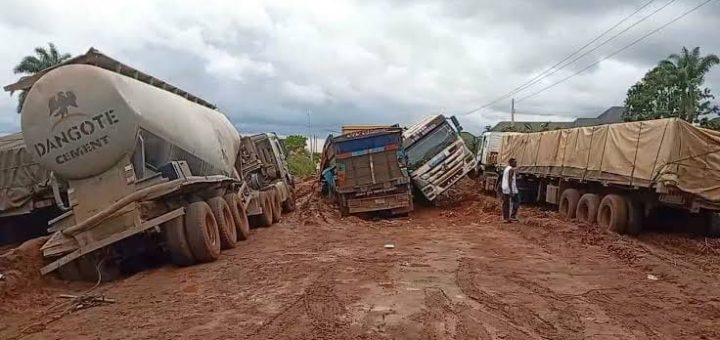
By Frank Ofili
President Bola Ahmed Tinubu’s recent comments questioning the construction of a flyover by a state governor he failed to name has generated considerable public debate. While every Nigerian is entitled to an opinion on public expenditure, one fundamental principle of our federal system should never be compromised: it is not the place of the President to determine what infrastructure a state requires.
Nigeria is a federation, not a unitary state. Governors are not branch managers of the Federal Government. They are independently elected by the people of their respective states to identify local problems and provide local solutions. They understand the peculiar traffic patterns, economic activities, population growth and infrastructure challenges within their states far better than officials in Abuja.
If a state genuinely needs a flyover, then by all means, the governor should build it.
Development is not a one-size-fits-all exercise. What may appear unnecessary in one state may be indispensable in another. A densely populated commercial city battling chronic traffic congestion cannot be expected to adopt the same infrastructure priorities as a predominantly rural state. Good governance demands responsiveness to local realities, not conformity to centrally imposed preferences.
Indeed, if I, Frank Ofili, were privileged to serve as the Governor of my home state of Delta, and professional traffic and engineering assessments showed that a particular location required a flyover, I would approve its construction without hesitation. My responsibility would be to solve the problems confronting my people, not to seek validation from the Presidency before doing so.
The real question Nigerians should be asking is this:
Why should the Federal Government concern itself with discouraging flyovers while thousands of kilometres of federal roads remain in deplorable conditions?
Across Nigeria, federal highways have become symbols of neglect. Many are riddled with potholes, failed bridges, washed-away sections and abandoned construction projects. Motorists spend endless hours navigating roads that should have been rehabilitated years ago. Businesses incur enormous transportation costs, agricultural produce is lost before reaching markets, and avoidable road accidents continue to claim innocent lives.
Recently, I authored a Save-Our-Soul (SOS) on Asaba-Illah-Abuja federal road. That road is impassable as I write this piece. As someone from Illah in Delta State, I speak not merely from theory but from painful experience.
The collapse of sections of the Asaba–Illah–Abuja federal road has, at different times, severely disrupted access to my hometown. Residents, traders, students, farmers and visitors have all borne the consequences of a federal road that has deteriorated to an unacceptable condition. Communities along that corridor have become increasingly isolated, economic activities have suffered, and ordinary citizens have paid the price for governmental neglect.
Now imagine this.
Suppose the Delta State Government, under Governor Sheriff Oborevwori, identifies an engineering intervention such as a flyover, bridge, or bypass that restores access, improves traffic flow and reconnects communities affected by the failed federal road.
Would the governor be wrong for doing so?
Absolutely not.
The people stranded by failed infrastructure are not interested in constitutional arguments over which tier of government owns the road. They simply want to get to their homes, transport their farm produce, reach hospitals, attend schools and conduct their businesses safely.
Government exists to solve problems, not to defend bureaucratic boundaries.
Perhaps if the Federal Government devoted greater attention and resources to rehabilitating Nigeria’s extensive network of federal highways, state governments would not find themselves compelled to undertake expensive interventions that arguably should not have become necessary in the first place.
Ironically, many of the traffic and accessibility problems state governments are trying to solve today are themselves consequences of the failure of federal infrastructure. When federal highways deteriorate, traffic spills onto state roads. When major federal junctions become bottle-necks, state governments are forced to intervene with costly engineering solutions. In that context, flyovers are often not luxuries or monuments to political vanity; they are practical responses to avoidable problems.
Those who dismiss flyovers as cosmetic projects overlook their substantial economic, safety and social benefits.
Economically, flyovers reduce travel time, improve the movement of goods and services, lower fuel consumption, reduce vehicle operating costs and increase productivity. Efficient transport infrastructure enhances commerce, attracts investment and stimulates economic growth.
From a safety perspective, flyovers reduce conflict points at busy intersections, minimise collisions, improve traffic flow and facilitate quicker access for ambulances, fire services and other emergency responders. They also reduce driver fatigue and frustration associated with prolonged congestion.
Socially, flyovers improve the quality of urban life. They shorten commuting time, allowing families to spend more time together instead of being trapped in traffic. They reduce air and noise pollution caused by prolonged vehicle idling, improve access to schools, hospitals and markets, and contribute to better urban planning in rapidly growing cities.
Of course, no responsible government should construct flyovers where they are unnecessary. Every infrastructure project must satisfy the tests of necessity, affordability, engineering feasibility, transparency and value for public money.
But that is an entirely different argument from suggesting that governors should somehow seek presidential approval before addressing pressing infrastructure needs within their states.
The President has enormous national responsibilities. These include securing the country, strengthening the economy, improving electricity supply, modernising ports and railways, and rehabilitating the thousands of kilometres of federal roads that have fallen into disrepair.
That alone is a full-time assignment.
State governors likewise have a constitutional duty to improve the welfare of their people through investments in infrastructure, education, healthcare and transportation. Whether that involves constructing flyovers, expanding roads, building bridges or introducing mass transit systems should be determined by local needs, expert advice and democratic accountability—not by presidential preference.
The beauty of federalism lies in allowing different governments to pursue different solutions to different problems. Once Abuja begins prescribing what every governor should or should not build, we risk reducing our federation to little more than administrative convenience.
Mr. President should concentrate on fixing Nigeria’s collapsing federal roads.
Governors should remain free to solve the infrastructure challenges confronting their states.
If Abuja faithfully performs its constitutional responsibilities, many of the interventions currently being undertaken by state governments may never become necessary.
Until then, no governor should be criticised for building infrastructure that improves the lives of the people who elected him.
And that takes me to a much larger national conversation: the need to devolve more powers and resources to the states.
Nigeria’s current arrangement, under which states often have to wait for approvals or interventions from Abuja before critical infrastructure problems can be addressed, is increasingly proving inadequate for a country of over 200 million people. A federation functions best when each tier of government possesses both the authority and the resources to respond swiftly to the needs of its people.
If a federal road within a state has become impassable and the Federal Government is either unable or unwilling to intervene promptly, the state government should have clear legal authority—and sufficient financial capacity—to rehabilitate, reconstruct or redesign that road in the overriding public interest without being hamstrung by bureaucracy.
The citizens stranded on a failed highway are not concerned with constitutional ownership. They simply want safe roads, access to markets, functioning transport networks and a government that responds when infrastructure fails.
Greater devolution of powers would encourage faster decision-making, improve accountability and stimulate healthy competition among states in the delivery of infrastructure. It would also free the Federal Government to concentrate on genuinely national priorities while empowering states to solve problems closer to the people.
The beauty of federalism lies in allowing different governments to pursue different solutions to different problems. Once Abuja begins prescribing what every governor should or should not build, or once states are prevented from fixing infrastructure simply because it bears the label “federal,” we reduce federalism to little more than administrative convenience.
Mr. President should concentrate on fixing Nigeria’s collapsing federal roads. At the same time, Nigeria should begin an honest conversation about empowering states with greater constitutional authority and financial resources to intervene wherever critical infrastructure within their territories has failed.
Governors should remain free to solve the infrastructure challenges confronting their states.
If Abuja faithfully performs its constitutional responsibilities, many of the interventions currently being undertaken by state governments may never become necessary. But where it does not, states should not be compelled to fold their arms while their citizens suffer.
That is how true federalism works.
That is how responsible governance works.
And that is how Nigeria ought to work.