US–Iran Relations: The Long Shadow of 1953 and the Israel Factor
277 views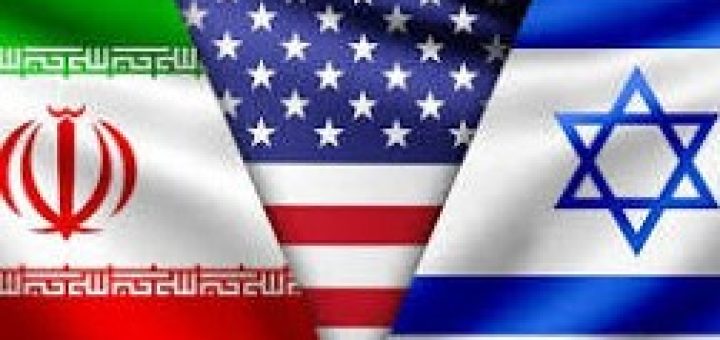
By Frank Ofili
History does not die in the Middle East. It lingers. It shapes memory. It hardens suspicion. Nowhere is this more evident than in the long, uneasy relationship between the United States and Iran.
For many Americans, tensions with Iran began in 1979 — with images of blindfolded diplomats and burning flags. For many Iranians, however, the story starts much earlier: in 1953.
That year, Iran’s democratically elected prime minister, Mohammad Mossadegh nationalized Iran’s oil industry, challenging decades of British economic dominance. In the tense climate of the Cold War, Washington feared instability and the possibility of Soviet influence. The CIA, working alongside British intelligence, launched Operation Ajax, orchestrating a coup that removed Mossadegh and consolidated the rule of Mohammad Reza Pahlavi.
To American strategists, it was a geopolitical victory. To many Iranians, it was the theft of their democracy.
The 1953 coup became the foundational grievance — the moment the United States shifted from distant partner to decisive political actor inside Iran’s domestic affairs. In the decades that followed, Iran was a close partner of the United States and, in several respects, a strategic counterpart to regional actors like Israel.
Long before the Islamic Revolution, Iran and Israel maintained an unusually close relationship for the region. Tehran recognized Israel in 1950 and, throughout the 1950s–1970s, cooperated economically, militarily, and technologically. Iran supplied Israel with large amounts of oil, while Israel provided military and technical assistance — exchanges that strengthened mutual interests in balancing regional Arab power.
This pragmatism fit within a broader U.S. strategy in the Cold War Middle East: the United States, Iran, and Israel found common cause against Soviet influence and rising Arab nationalism. Though the relationships were often discreet, Tehran’s ties to Tel Aviv were a pillar of regional calculations — and part of the U.S.’s “web of alliances.”
The 1979 Islamic Revolution shattered that matrix. The new Islamic Republic repudiated the monarchy’s ties to both Washington and Jerusalem. Israel was declared an enemy, and Tehran began supporting groups hostile to Israeli and Western interests. The revolution transformed Iran from a cooperative U.S. partner into one of Washington’s most persistent adversaries.
When the United States admitted the exiled Shah for medical treatment, Iranian students stormed the American embassy in Tehran. Fifty-two diplomats were held hostage for 444 days.
For Americans, it was humiliation. For many Iranians, it was revenge — a symbolic response to decades of perceived interference.
Diplomatic relations were severed. Sanctions followed. The two nations entered a cold hostility that has never fully thawed.
After the revolution, the Israel factor became part of the strategic alignment that deepened U.S.–Iran antagonism.
Iran’s new leaders framed the Islamic Republic as part of a broader resistance to Western and Israeli influence in the Middle East. Tehran’s support for proxy groups like Hezbollah and Hamas was often justified as resistance against Israeli policies.
Washington’s longstanding strategic alliance with Israel shaped American policy toward Iran. As Iran’s regional influence expanded — particularly through its nuclear program and support for allied militias — Israeli concerns fed into U.S. strategic calculus. Israeli leaders repeatedly warned of Iran’s nuclear ambitions as existential threats, pressuring Washington to adopt harder policies.
In recent years, the U.S. and Israel have coordinated measures — from cyber operations like Stuxnet to diplomatic pressure — targeting Iran’s nuclear and military infrastructure. Episodes of joint pressure and, at times, covert action have intensified Tehran’s perception of a strategic encirclement.
Today, the memory of 1953, the rupture of 1979, and the ongoing regional struggle with Israel together shape Iran’s worldview. Americans see a regime hostile to their interests and allies; many Iranians see a superpower that once removed their elected leader and continues to align with Israel against them.
History, in this relationship, is not academic. It is active.
Could the trajectory have been different had 1953 not occurred? Would Iran’s revolution have been less anti-American or less definably anti-Israel? Might reform have evolved more gradually?
There is no way to know. What is certain, however, is that external intervention and rivalry often produce consequences far beyond their immediate objective — consequences that echo across generations.
More than seventy years after Operation Ajax, and more than four decades after the revolution, the shadows of those decisions still hang over U.S.–Iran relations. Any serious conversation about future policy must begin with an honest reckoning of all these threads — including the role of Israel — because in Iran, memory is strategy. And history is never really over.