The Limits of Power: Why Israel-U.S. War on Iran Would Produce No Real Winner
258 views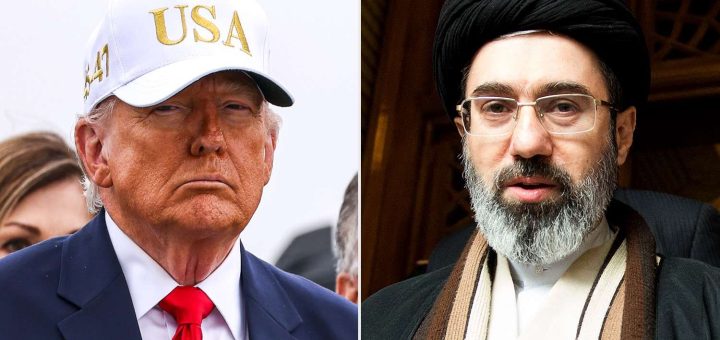
By Frank Ofili
For decades, tensions between the United States and Iran have oscillated between hostility and uneasy restraint. The rhetoric may change depending on who occupies the White House or the presidential palace in Tehran, but the underlying reality remains constant: neither side truly understands the other, and this mutual misreading creates the illusion that decisive victory is possible. In truth, a full-scale confrontation between Washington and Tehran would almost certainly end without a clear winner.
One of the greatest weaknesses of the administration of Donald Trump is its tendency to interpret Iran through Western political sensibilities. In Western democracies, public dissatisfaction can rapidly weaken leaders and even bring down governments. Washington often assumes that economic pressure, political isolation, or military intimidation will eventually cause the Iranian public to turn against its leadership.
But Iran is not easily understood through that lens.
Iranians are an intensely proud people with a long and deeply rooted sense of national identity that predates most modern states. Their political culture was shaped by centuries of foreign interference—from imperial Russia and Britain to the United States—culminating in the resentment that followed the 1953 Iranian coup d’état. That history has fostered a powerful instinct for national solidarity in the face of external pressure.
One of the greatest weaknesses of the administration of Donald Trump is its tendency to interpret Iran through Western political sensibilities.
Even leaders who face criticism at home often gain renewed legitimacy when the country perceives itself to be under foreign threat. The authority of figures such as Sayyed Mojtaba Khamenei, Iran’s recently appointed Supreme Leader, rests not only on political power but also on the narrative of resistance against outside domination. When tensions escalate with Washington, internal divisions tend to narrow rather than widen. When the chips are down, many Iranians—regardless of their views on domestic governance—rally around the state.
If this cultural reality represents one of Washington’s weaknesses, the Trump administration also possessed a considerable advantage: a powerful global communications and propaganda apparatus. The United States dominates much of the international media space and possesses unmatched capacity to shape narratives across television networks, digital platforms, and diplomatic channels. In any confrontation with Iran, the American story would likely travel farther and faster.
Iran, by contrast, suffers from a kind of strategic reclusiveness. Its leadership often communicates in ways that are opaque to outsiders, relying on tightly controlled domestic media and limited engagement with international audiences. This isolation weakens Tehran’s ability to win global sympathy or explain its actions effectively.
Yet paradoxically, this same reclusiveness is also one of Iran’s greatest strategic assets.
Because Iran reveals little of its internal deliberations, its intentions are notoriously difficult to predict. Its military doctrine emphasizes asymmetry, patience, and indirect confrontation.
Over decades, Iran has cultivated networks of allies and proxy forces across the Middle East, enabling it to respond to pressure in ways that are rarely linear or conventional. An adversary may win the first battle, only to discover that the conflict has spread into arenas that were never anticipated.
This unpredictability complicates any attempt by Washington to achieve a decisive military outcome.
The United States undoubtedly possesses overwhelming conventional military superiority. No serious analyst would dispute that American forces could inflict devastating damage on Iranian infrastructure, military installations, and economic assets. But modern warfare is not measured only by battlefield dominance; it is measured by political outcomes.
Here lies the central dilemma.
Iran does not need to defeat the United States militarily to claim strategic success. It only needs to survive and sustain resistance long enough to make the cost of victory unacceptable. The country’s geography, population, ideological networks, and regional alliances would make a clean, swift resolution nearly impossible.
History offers a cautionary precedent. When the United States entered the war in Afghanistan following the September 11 attacks, it possessed overwhelming military superiority. The initial campaign quickly dismantled the Taliban government. Yet what followed was a prolonged conflict lasting two decades, culminating in the United States withdrawal from Afghanistan and the Taliban’s return to power.
The lesson was stark: military dominance does not guarantee political victory.
The war with Iran is likely be even more complex. Unlike Afghanistan, Iran is a large, cohesive state with established institutions, a sophisticated military structure, and a population of nearly ninety million people. Its strategic depth and regional reach would transform any confrontation into a sprawling, unpredictable struggle.
Iran, by contrast, suffers from a kind of strategic reclusiveness. Its leadership often communicates in ways that are opaque to outsiders, relying on tightly controlled domestic media and limited engagement with international audiences. This isolation weakens Tehran’s ability to win global sympathy or explain its actions effectively.
For the United States, the danger would be entering another open-ended conflict—costly in resources, politically divisive at home, and strategically draining. For Iran, the cost would be immense economic destruction and potential internal upheaval.
In the end, neither side could truly win.
The United States could devastate Iran but might find itself trapped in yet another protracted conflict with no clear political resolution. Iran could resist and survive, but only at enormous cost to its economy, infrastructure, and people.
War, therefore, would not produce victory; it would merely produce exhaustion.
And in the harsh arithmetic of geopolitics, a war that leaves both sides weakened is a war that no one truly wins.
And the third victim of the senseless war? The global economy. It is only 10 days of the war and the global economy is already taking a bashing.
Let saner heads in Washington, Tehran and around the world come to the rescue.